0
- Ski Chalets
- Villas
- Destinations
- Collections
 Search
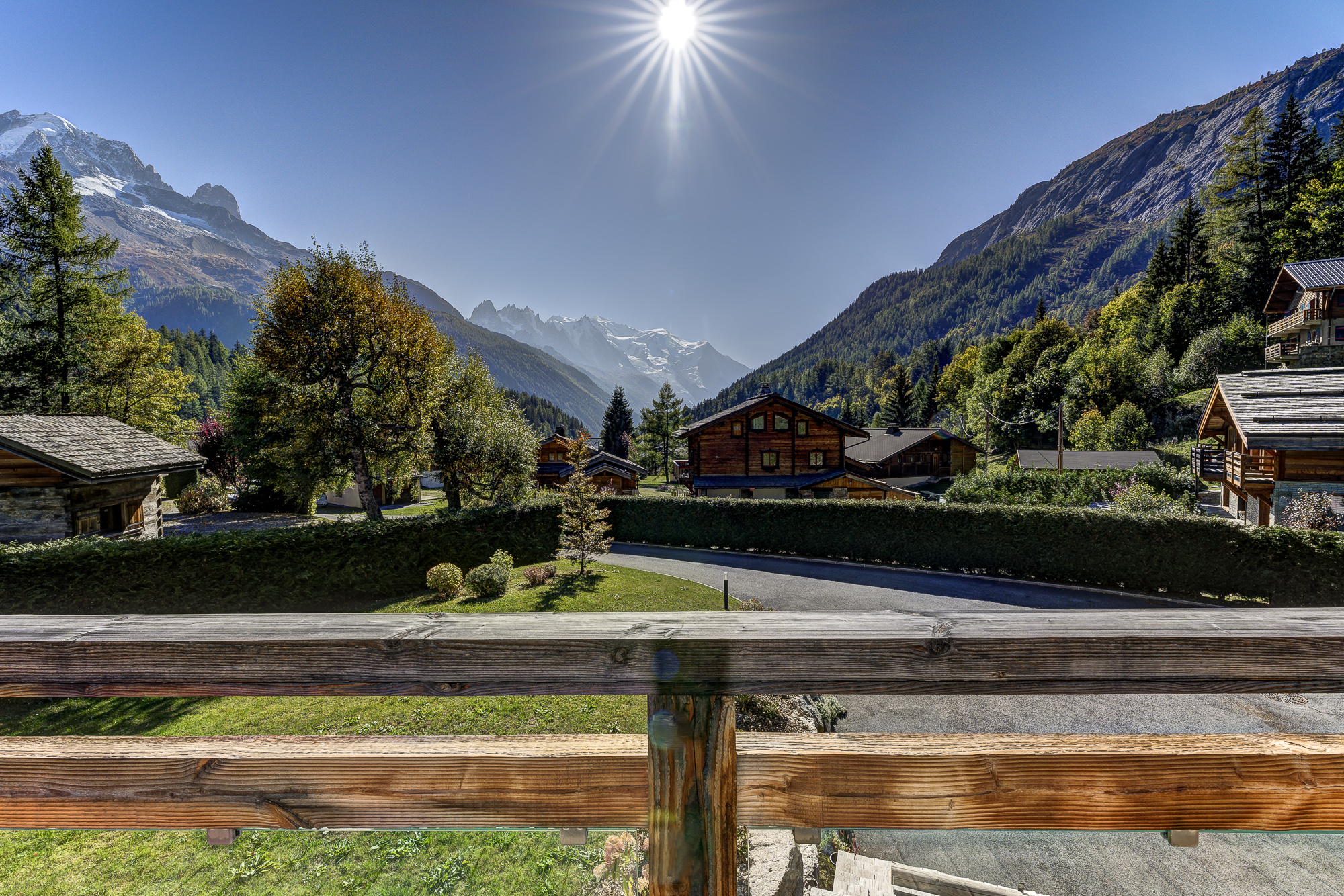
The host of the very first Winter Olympics in 1924 and the birthplace of modern alpinism, Chamonix is one of the most unique destinations in the Alps.
Today, Chamonix combines high-altitude, relatively snow-sure skiing with a lively town and an alpine heritage dating back further than most other ski resorts.
At Firefly Collection, we specialise in luxury ski holidays, with a carefully curated portfolio of over 40 luxury ski chalets in Chamonix. Our unique perspective is shaped by working closely with the properties, teams, and guests who return here year after year. This gives us a clear understanding of what really matters when choosing Chamonix for your next luxury ski holiday.
In this guide, we bring together our unique insight with practical advice on where to stay, when to visit, and what to expect – whether you’re planning a last-minute ski weekend or a fully catered luxury ski trip.
With good altitude slopes, Chamonix has a strong snow record and off the pistes, the town centre remains buzzy all evening long.
What sets Chamonix apart is this balance. It combines world-class skiing, a bustling historic town, and a lively social scene, with a wide choice of bars and restaurants (more than most ski resorts). It’s also one of the most reliable resorts for snow conditions throughout the season.
Visitors who haven’t been to Chamonix often look at the town’s altitude of 1,035m and think it’s a lower-altitude destination. This is far from the truth! With large, swift cable cars up from the valley bottom, the majority of Chamonix’s skiing starts at 1,800m and goes up from there.
Thanks to the altitude of the surrounding Mont Blanc Massif, Chamonix attracts good snowstorms and regular dumps, keeping conditions fresh all season too. In the summer, the town is still surrounded by snow-capped peaks, giving it the feeling of a true mountain town.
For skiers, Chamonix offers one of the most complete experiences in the Alps, with four independent ski areas, offering around 150km of slopes, each with terrain suited to beginners, confident intermediates and advanced skiers, depending on your locale.
For those looking to combine exceptional skiing with high-end accommodation, Chamonix has a wide collection of luxury ski chalets, many of which offer private wellness facilities and fully catered service.
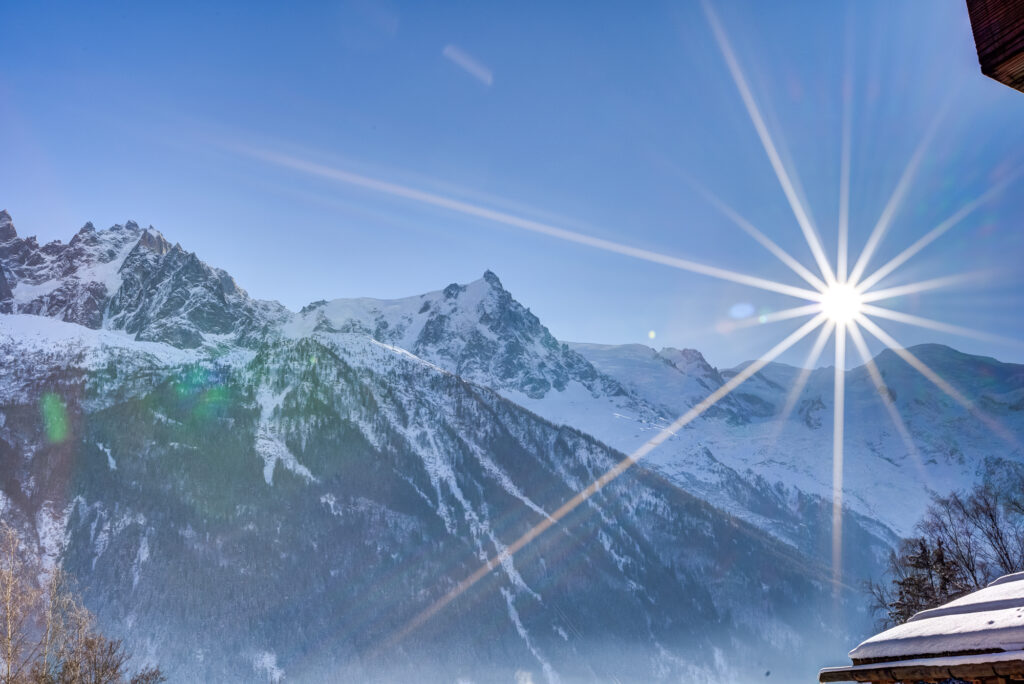
We love Chamonix for its world-class skiing. With a huge variety of terrain, there is plenty for all levels of skiers.
With its ski area split up into different, distinct sections, we thought it was important to provide more details on each one to better understand what skiing in Chamonix entails.
At the entrance to the valley, you’ll find Les Houches, which offers a welcoming mix of pistes for all levels. It has a good number of gentle blues for beginners, but Les Houches is also home to the famous black World Cup Kandahar piste for advanced skiers.
Les Houches offers lovely tree-lined slopes, especially on the lower sections, making it a great option in poor weather or lower visibility. It also has a particularly ‘alpine’ feel due to this, too.
For non-skiers, there are marked snowshoe trails with signposted routes that allow you to enjoy panoramic views from a different perspective.
The historic Tramway du Mont Blanc also runs from Les Houches, providing access towards Saint Gervais and serving as part of the route used by climbers heading towards Mont Blanc.
The ski areas closest to Chamonix town are Brévent and La Flégère. These are two areas fed by two main lifts from the valley floor. Once on the mountain, they’re linked, and you can easily ski between them.
Together, they offer a good mix of slopes, from wider, scenic pistes to steeper runs for more confident skiers. Flégère also has dedicated beginner areas and a fun zone for children, making this sector a popular choice for both families as well as more experienced skiers.
South-facing Brévent and Flégère enjoy sunshine from the morning through to mid-afternoon on clear days. Plus, since they sit opposite Mont Blanc, they also offer some of the most spectacular views of the peak.
Towards the upper end of the Chamonix Valley is the village of Argentière and the Grand Montets ski area. Argentière has a quieter, more traditional feel than central Chamonix, with local cafés and a strong mountain community atmosphere.
This vibe stems from the Grand Montets’ formidable reputation. Known as one of the most challenging in the Alps, it promises advanced skiers steep slopes, excellent freeride terrain and plentiful ski touring opportunities.
Due to its altitude (3,275m), glaciers and north-facing slopes, Grand Montets is one of the most snow-sure areas of the valley and tends to hold conditions particularly well. As a result, it tends to open a little earlier (late November) and stay open through to early May too.
Outside of lift opening times, it’s also popular for ski touring, especially with guides.
At the furthest point up the Chamonix Valley, you’ll find Le Tour and Vallorcine. These are a bit quieter and often overlooked by those coming to Chamonix for more hardcore mountain activities.
So, for those looking for varied terrain without the intensity of some of Chamonix’s steeper sectors, Le Tour and Vallorcine are the perfect options. Since it is primarily easier pistes here, and the more advanced skiers head to Grand Montets, there is a lovely, relaxed ‘no pressure’ atmosphere on the slopes here.
Le Tour is known for its wide, open slopes and sunny aspect, while Vallorcine has a more peaceful, traditional alpine character. Both areas are popular with beginners, intermediates and families, thanks to their more forgiving terrain and relaxed pace.
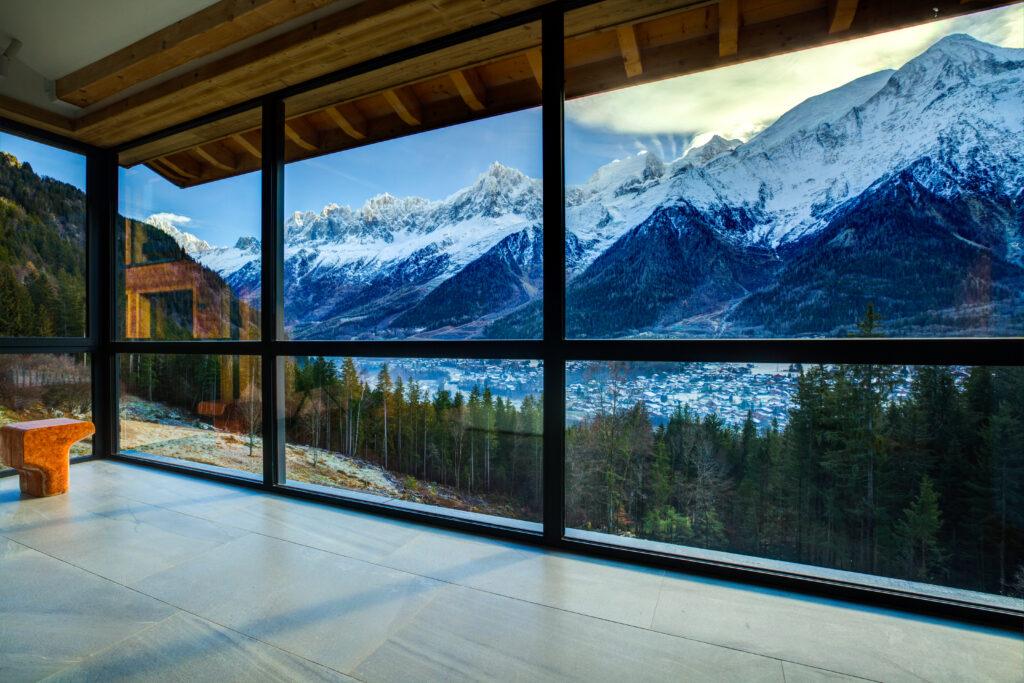
Over the last couple of decades, Chamonix has developed significantly as a destination for luxury ski accommodation, with an impressive and ever-expanding collection of chalets that combine traditional Alpine design with modern comfort and service.
Many luxury chalets in Chamonix are designed around the fantastic views of Mont Blanc and the Massif with open-plan living spaces and wellness areas framed by floor-to-ceiling windows, which bring the mountains right into the chalets.
Luxury chalets in Chamonix include features like private spas, swimming pools, cinema rooms, and dedicated staff. Many are fully catered, with a private chef, host, and driver service, allowing you to focus on enjoying your time in the mountains.
Self-catered options provide more flexibility and the opportunity to enjoy some of the fantastic restaurants in the centre of Chamonix, while still offering the privacy and space that make chalets so appealing for groups and families.
We know that ski-in/ski-out properties are among the most desirable across the Alps, but they are relatively rare in Chamonix. A couple of exceptions are Chalet Kuma and Norel. These sit on the Kandahar black World Cup slope in Les Houches and offer direct slope access for confident skiers.
For many visitors, however, the advantage of a luxury chalet in Chamonix is the flexibility to choose a different ski area each day, depending on weather, snow conditions and the ability of the group.
Since Chamonix’s ski area is split up across several non-linked areas, a ski-in/ski-out chalet can only provide that slick access to a certain area. Hence, to enjoy all the valley has to offer, an element of driving (yourself or with a driver service) or using the fantastic public transport system is necessary.
Browse our collection of luxury ski chalets in Chamonix here
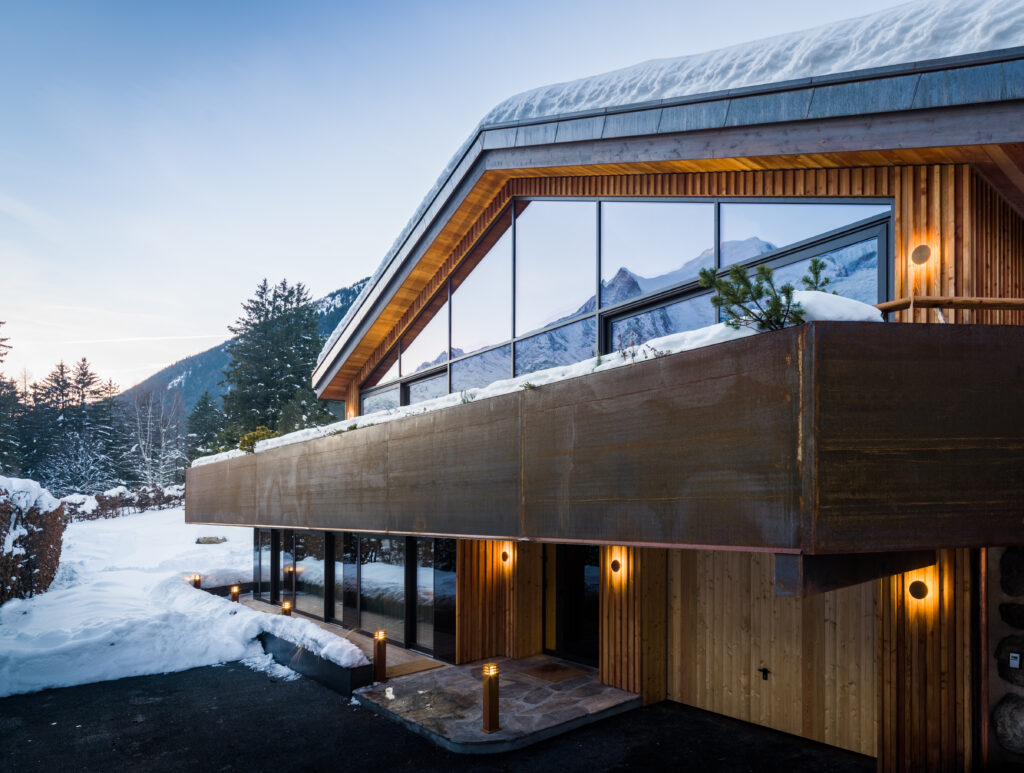
A long-time favourite among mountaineers, Chamonix has a je ne sais quoi and has maintained a distinctive alpine charm despite becoming one of the world’s best-known ski and mountain destinations.
Chamonix is best suited to visitors who value heritage, an authentic mountain town and the unique atmosphere that comes with this.
It is particularly popular with confident intermediates and advanced skiers, thanks to the scale and diversity of terrain across the Mont-Blanc Unlimited ski pass, as well as the resort’s more reliable snow conditions compared with lower resorts such as neighbouring Megève.
Chamonix also works especially well for corporate groups. Its proximity to Geneva Airport, combined with extensive skiing, lively après-ski and a wide selection of high-end accommodation, makes it an ideal choice for company ski holidays and weekend trips.
Many of the luxury ski chalets in Chamonix are designed with large groups in mind, offering spacious living areas, private wellness facilities, and fully catered service.
Chamonix appeals to those looking for a more organic alternative to some of the Alps’ more overtly glamorous destinations. Compared with Val d’Isère and Courchevel 1850, Chamonix feels especially authentic, as it remains a fully functioning town beyond tourism. At the same time, it offers a strong range of luxury accommodation, reliable snow conditions, good lift infrastructure and a vibrant social scene.
Although Chamonix is not usually considered one of the Alps’ most beginner-focused resorts, it can still work well for learners. Excellent ski schools and dedicated learning areas, particularly in Les Houches and Le Tour/Vallorcine, provide gentle green and blue runs where beginners can build confidence.
Overall, Chamonix is a strong choice for those looking for a one-of-a-kind ski holiday, where an authentic mountain town meets exceptional skiing, high-quality accommodation and a lively atmosphere.
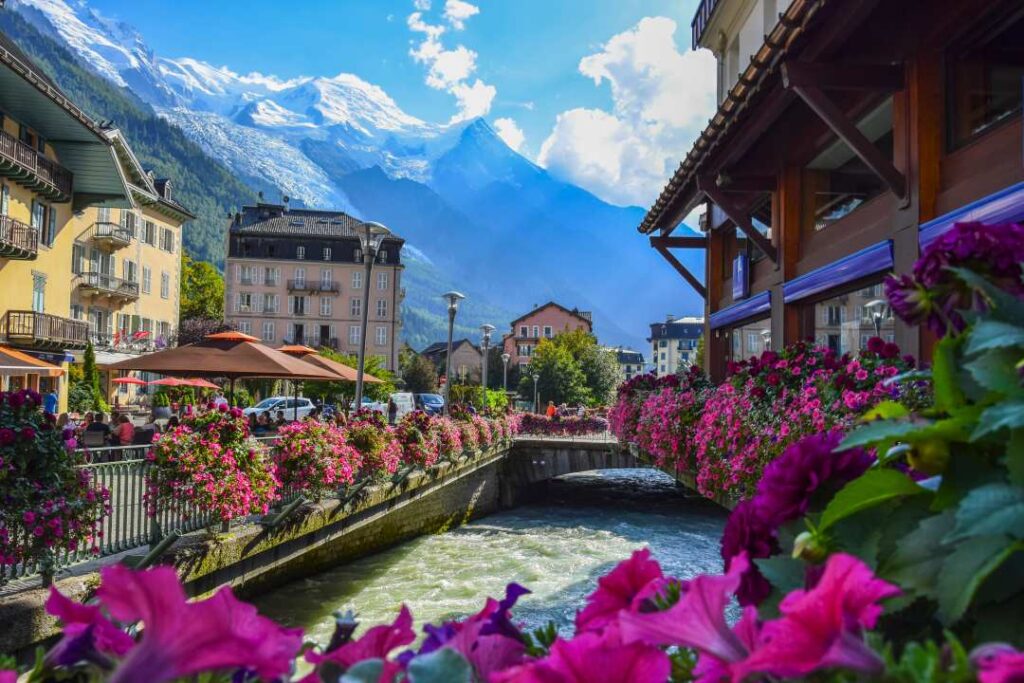
Chamonix is an all-year-round resort and well worth visiting any time.
Nevertheless, the winter ski season runs from December to April, with peak summer season in late June, into July, through August to mid-September. In Argentierè due to the high altitude, it opens a little earlier in late November and stays open later into early May. This is one of the longest seasons in the Alps.
Due to its proximity to Geneva, Chamonix is very popular for weekend trips. Hence, there’s an element of increased busyness and queues over this time.
For skiing and winter sports, March is one of the best times to visit Chamonix, offering reliable snow, longer sunny days and fewer crowds than the busiest holiday weeks (Christmas, New Year and February).
For hiking, sightseeing and mountaineering, early September is ideal, with warm weather, open trails and a quieter atmosphere than peak summer.
If you are thinking of skiing in April, Chamonix is one of the best resorts to choose due to the high altitude of the ski area. This means Chamonix has some of the most reliable snow conditions in the Alps for late-season skiing.
The months of December and January see the heaviest snowfall in Chamonix.
The high altitude of the ski area right along the Mont Blanc Massif means the snow coverage on the pistes tends to be very good right through to mid/late April. This makes Chamonix a reliable destination for ski trips throughout the winter season.
Chamonix typically sees fewer clear-sky days than many other ski resorts in the Alps since it’s quite a deep, steep valley within the Mont Blanc Massif. These peaks trap moisture and generate their own microclimate, leading to more frequent cloud cover. While this can mean fewer blue sky days, it also helps make Chamonix one of the snowiest and most reliable destinations in the Alps.
The table below shows the average snowfall each month. Bear in mind that snow builds up over the season, so even though there is more snowfall early in the season, there is usually more snow built up after the first few months.
| Month | Average Snowfall | Snowfall Days |
|---|---|---|
| December | 168cm | 12.4 days |
| January | 176cm | 12.4 days |
| February | 144cm | 13.2 days |
| March | 148cm | 14.4 days |
| April | 104cm | 14.8 days |
Snow data from snow-forecast.com, averaged from research spanning more than a decade. The weather is different each year, but looking at historical averages, you can get a great idea of what to expect.
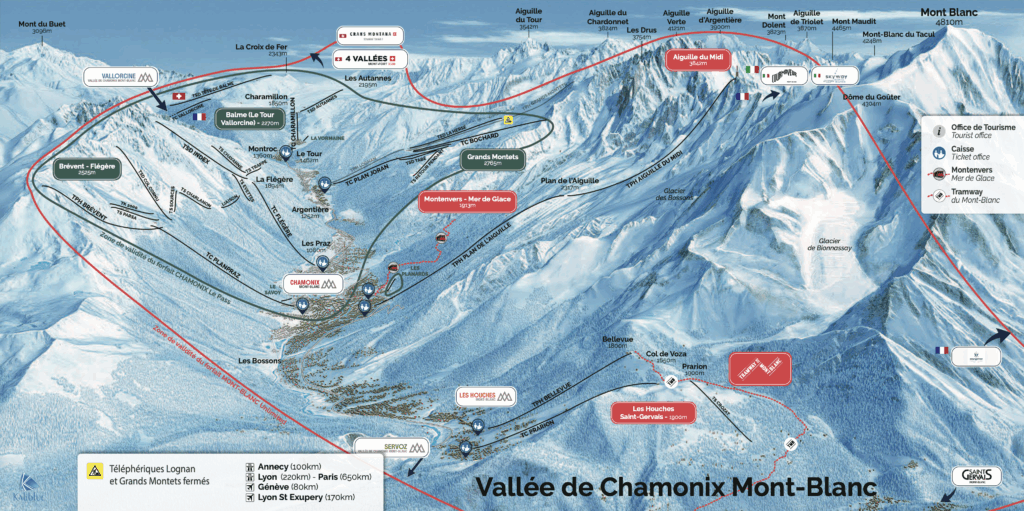
Chamonix is a world-renowned destination for skiing, with a big name and reputation as the heart of alpine sports. The various ski areas accessed from Chamonix offer pistes and views for every ability and taste.
Plus, its position also offers easy access to other famous ski resorts such as St Gervais, Megève, Courmayeur and Verbier. All of these destinations can be visited under the Mont Blanc Unlimited ski pass.
Chamonix also has the advantage of altitude, with most of the skiing being above 1,800m and extending up to an impressive 3,275m (or to 3,842m if doing the Vallée Blanche). As a result, the snow record is extremely good, and you can be confident of finding some decent snow when skiing in Chamonix.
The Chamonix lift system is modern and efficient, and has been recently upgraded to help iron out bottlenecks and cope with the crowds.
| Ski Lift Type | Count |
|---|---|
| Cable Cars | 4 |
| Gondolas | 13 |
| Chairlifts | 50 |
| Drag Lifts | 19 |
| Magic Carpets | 5 |
| Funicular | 1 |
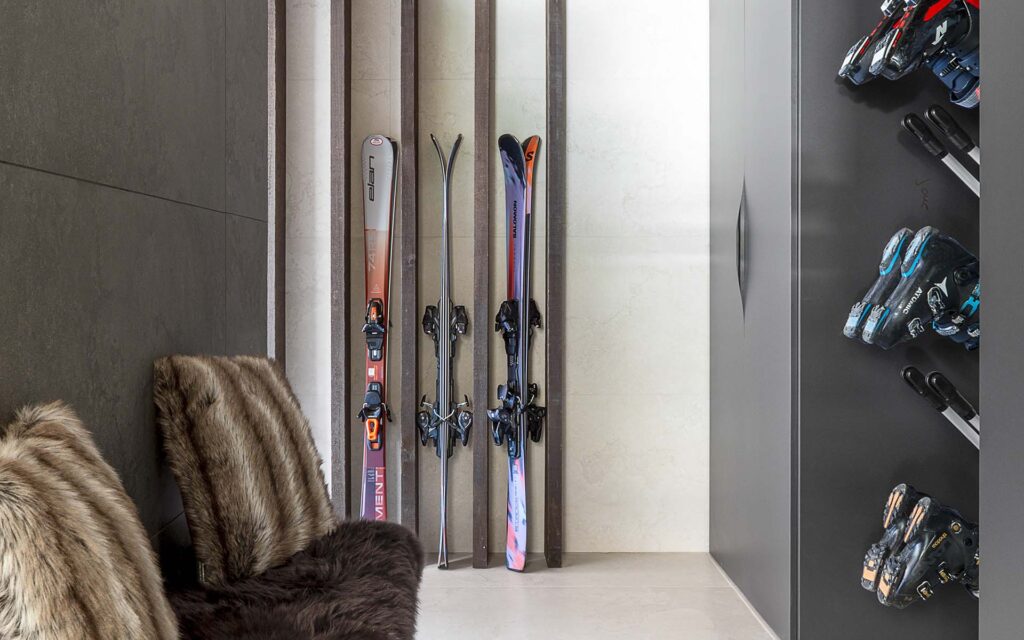
Ski hire in Chamonix is straightforward, with 20+ rental shops located in the centre. Many offer online services where you can pre-book for better prices and easily collect on arrival, which is often the most convenient option, especially if self-driving.
When staying in a luxury ski chalet, there are options for in-chalet fittings and delivery, or your private chauffeur can bring you to the ski shops.
There are several lift pass options available, including full access to the full Mont-Blanc Unlimited ski pass (covering over 400km throughout the Chamonix Valley, Megève, St Gervais, Courmayeur, extending to Verbier in Switzerland too).
There are also passes for just the Chamonix Valley (Chamonix Le Pass offers 115km of skiing within the Chamonix Valley) or, for each individual area, such as Les Houches or just the Le Savoy beginners’ area.
These smaller passes would work well for beginners or family groups who are happy getting to know a smaller ski area and might not be covering the kilometres just yet.
Which school and lessons are right depends on your skill, learning style and where you are staying. We can recommend a ski school if you book your ski chalet with Firefly Collection.
At either end of the valley, the areas of Les Houches, Le Tour and Vallorcine are good options for newer skiers. They offer a good range of gentle blue runs and, since their reputation is on the easier side, lots of the (intimidating) hardcore skiers avoid these areas in search of more challenges. Hence, they’re left for beginners and those wanting an easier time.
Very first-timers may also want to consider starting in Les Planards, a small family-friendly collection of slopes close to the centre. With two green runs, a blue run, a red run, an alpine luge, a toboggan area and a restaurant, it is a convenient base for learning and family fun.
Le Savoy is another small, central slope where young children often take their first turns. It is free for under-fives, and a dedicated pass makes learning from town simple, affordable and much easier than travelling higher up the mountain.
Across the Chamonix Valley, there are excellent ski schools and expert instructors to help beginners build confidence.
Intermediate skiers are well catered for in Chamonix, with a wide choice of blue and red runs across the valley. Les Houches and into St Gervais is especially rewarding, offering varied terrain and tree-lined slopes.
Closer to the centre of Chamonix, Brévent/Flégère also has more challenging pistes and wide, open runs that give intermediates plenty of scope to refine their technique with fantastic views of Mont Blanc too.
For those ready to explore further, guided off-piste routes offer a safe introduction to the more adventurous terrain that Chamonix is known for.
It’s no surprise that Chamonix is a must-visit for skiers in the know. From high-altitude glacier skiing to fast, challenging descents, it’s a natural choice for skiers seeking adventure.
For the most advanced skiers, Argentière and its Grand Montets area are a true paradise. Expert skiers can tackle steep, technical runs, mogul fields, and off-piste routes that offer exhilarating descents.
There are also numerous ski touring and backcountry options, with guides available for those exploring more rugged terrain. The best-known is La Vallée Blanche, a 20km route with a 2,700m vertical descent from the Aiguille du Midi at 3,842m to the valley floor.
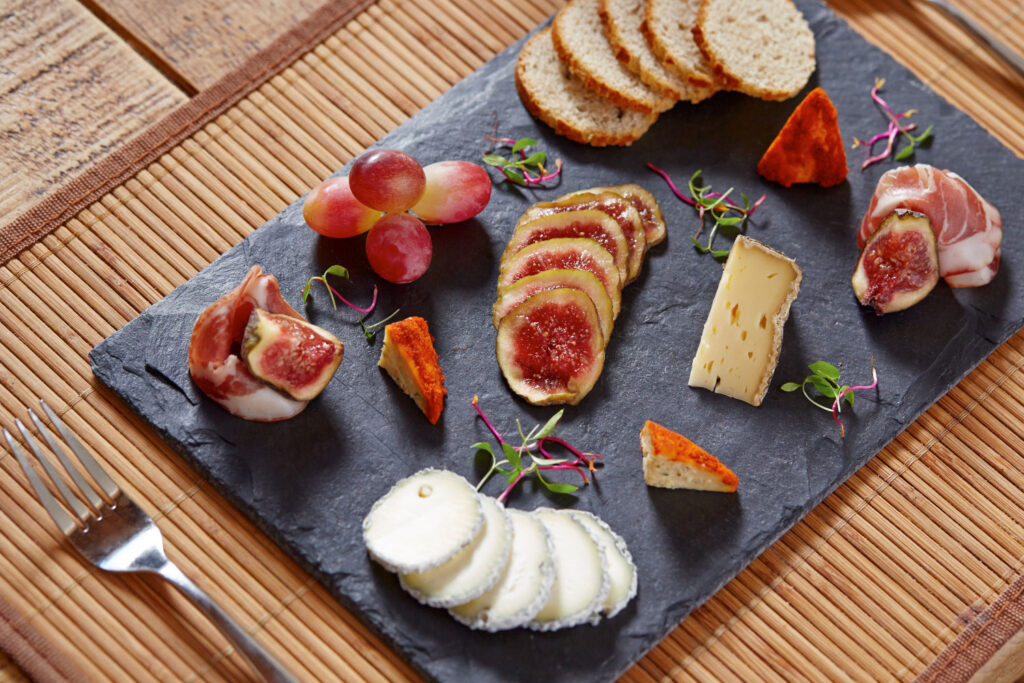
Chamonix’s unique mix of heritage and the endless activities on offer makes for a memorable trip, even if you never clip on a set of skis. It’s perfect for groups that have both keen skiers and non-skiers who love the lively atmosphere and the dramatic scenery.
Chamonix is less of a ski resort and more of a vibrant mountain town. As a result, the centre has plenty going on and is a great option for non-skiers. There are more shops, restaurants, bars and cafes here than in other resorts and plenty to keep you entertained.
There is no shortage of bars, happy hours and late-night venues for those who want to head out after skiing or dinner.
Chamonix is home to the legendary La Folie Douce, though unlike its mountaintop counterparts, this one is a hotel in the centre of town. It’s indoor and outdoor bars still deliver plenty of champagne, shows and high-energy glamour; however, it isn’t the best of La Folie Douce, and it isn’t the most ‘Chamonix’ venue either.
Many instead head to Chambre Neuf, where live music six nights a week creates an energetic après-ski atmosphere. From there, the Rue du Docteur Paccard leads into the centre. It’s lined with many great bars to ease into the evening.
For a more relaxed drink along here, try Elevation 1904, known for its beer selection and cocktails, or La Terrasse, once in the centre. In town, you are never far from a bar that could easily become a holiday favourite!
As a sizeable town, Chamonix offers an impressive range of restaurants, from new openings to high-quality international cuisine.
Some of the best restaurants in Chamonix include Restaurant Atmosphère, with a gorgeous veranda overlooking the river and serving Savoyard cuisine and classic wines.
Chamonix also has a Michelin-starred restaurant, Albert 1er, alongside a wide choice of international dining. Favourites include Munchie and JOIA, while piste-side spots such as La Bergerie de Plan-Praz in Brévent are perfect for warming dishes on a sunny terrace.
At 3,842m, at the top of the Aiguille du Midi cable car, Le 3842 offers one of the most memorable dining experiences in the Alps, with spectacular views and a concise seasonal menu focused on local mountain ingredients. Open for lunch only, between 12 pm and 2 pm, it is a truly unique experience.
After dinner, have a wander around the centre sus out a bar you want to go to next or head to Chamon’Ice (ChamIce for those in the know) for a couple scoops with proper metal, takeaway metal engraved spoons.
Ever connected to its roots, Chamonix’s shops are primarily large outdoor brands such as Patagonia, Columbia and The North Face.
As such, shopping in Chamonix is perfect for picking up high-quality kit rather than the designer pieces from Prada and Chanel that are found in the likes of Courchevel 1850. If you want big-name outerwear, Chamonix caters a little to the luxury market with Moncler, Rossignol, and Ogier stores, though.
Chamonix’s winter sports heritage is legendary: it hosted the first Winter Olympic Games in 1924. Since then, Chamonix has maintained a remarkable Olympic connection, with local athletes continuing to represent the town at every Winter Games.
Today, Chamonix hosts world-renowned sporting and alpine competitions throughout the year.
Highlights include the Ultra-Trail du Mont-Blanc finals in August, the Marathon du Mont-Blanc in late June, and the IFSC Climbing World Cup, which brings international competition into the centre of Chamonix each July.
In winter, the resort also stages ski touring and freeride events, including Freeride World Tour Qualifier competitions.
If you’d rather take in the famed views without breaking a sweat, book yourself in for a dog sledging experience. It’s a unique way to see the Alps and a must for dog lovers.
The two main routes are usually in Le Tour, which gives you views over into Switzerland or closer to town, on the Chamonix Golf Course in Le Praz.
As a fully functioning mountain town, Chamonix offers plenty to do beyond the slopes. Cinema Vox and Cinema Immersive 4D screen new releases and classic films in French and English, perfect for an evening or a poor-weather day. You can also arrange private screenings.
For a more private evening, many of our luxury chalets in Chamonix feature TV lounges or cinema rooms, allowing you to unwind with a favourite film in the comfort of your own alpine home.
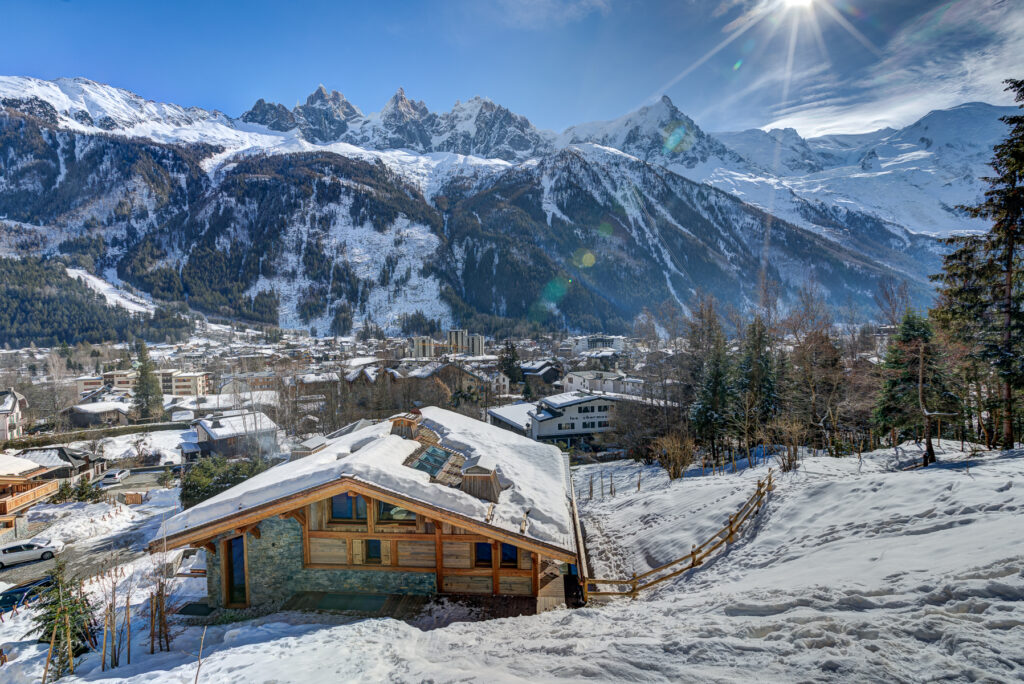
In central Chamonix, the Bois du Bouchet area has groomed sledging zones that are well-suited to families and relaxed winter fun.
Or Les Chavants in Les Houches offers dedicated sledging tracks, separated by age group and safely set apart from the ski slopes.
Le Royal Casino is open until 2 am for those feeling lucky. It offers 68 slot machines, two electronic roulette games and electronic blackjack, as well as traditional tables including two blackjack tables and one English roulette table, open daily from 7:40 pm.
At the top of the Aiguille du Midi, The Vertical Space is the world’s highest mountaineering museum at 3,777m. It celebrates the pioneering history of alpine climbing, legendary adventurers and the conquest of Mont Blanc through historic artefacts and photographs.
If you have a head for heights, you can also step onto the glass skywalk, suspended above a dramatic 1,000m drop.
Back down in the centre of Chamonix, the Alpine Museum, opened in 1898, traces the development of Chamonix and the surrounding area. It offers an interesting look at how alpine destinations evolved from mountaineering hubs into modern leisure resorts. And there’s also the Mont Blanc Museum, which is the largest museum in France dedicated entirely to mountain culture.
Or, most recently, the Crystal Museum, opened in 2021, displays almost 1,900 crystals from the Alps and around the world.
Paragliding in winter can be chilly, but when you wrap up right, there’s no better way to take in the breathtaking sights of the Mont Blanc Massif and Chamonix Valley.
There are several paragliding outlets in Chamonix with many take-off points easy to access from the lifts or transport network. The most common and popular option is from the Planpraz / Brevant lift down to the valley bottom. Or, for something unique, you can go tandem with private pilots from the Aiguille du Midi mid-station.
Ice skating is especially great for couples or families looking to slow down a little and enjoy a quieter, more intimate time together.
There are several ice rinks in Chamonix. The main one is in Richard Bozon Sport Centre in the centre of Chamonix. This is an Olympic-sized rink open all year round. Or, if you’re based closer to Les Houches in the winter, there’s a smaller, open-air rink at the base of the lifts too.
If all of the above sounds a little too strenuous for you, and you want a real retreat, the answer is a spa day.
Our recommendation would be QC Terme Spa, which has an extensive range of facilities and unbeatable views of Mont Blanc while still being close to the centre of Chamonix – it’s a nice walk from the centre, past the tennis courts and to the spa.
Or, of course, many of our luxury chalets in Chamonix have a range of private wellness facilities like hot tubs, saunas and swimming pools, so you can make the most of these too.
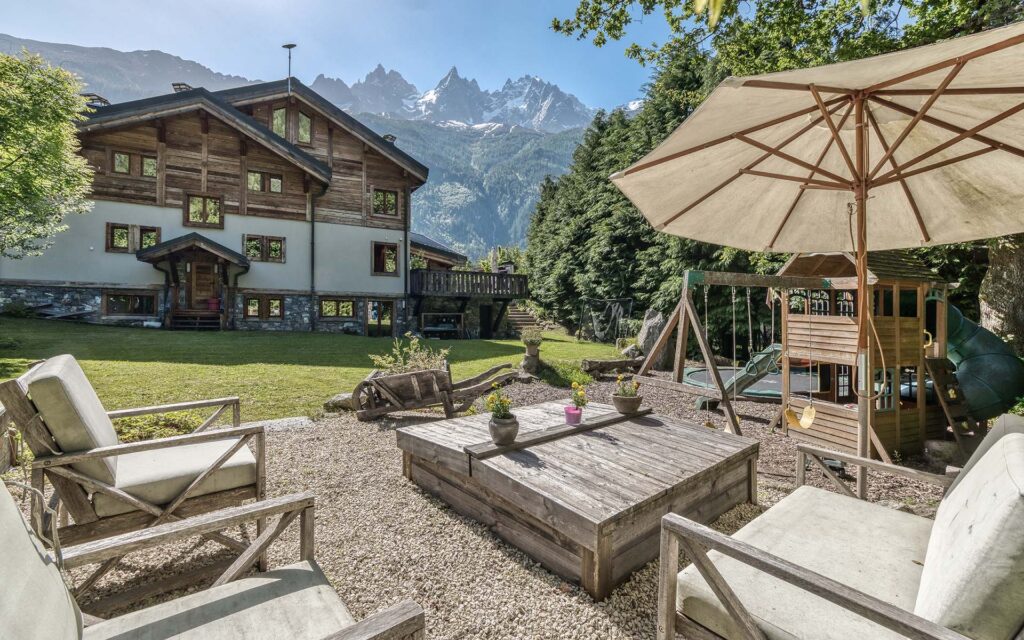
In summer, Chamonix feels especially vibrant. Locals and visitors fill the cafés that line the town square, flowers spill from hanging baskets, and the river rushes through the centre with snowmelt from the mountains.
As the home of mountaineering, Chamonix is an excellent choice for a climbing holiday. Experienced climbers will find plenty to challenge them, while families and beginners can enjoy via ferrata routes, popular bouldering areas and a high-ropes course that children love.
Under the Mont Blanc Massif, Chamonix also offers exceptional hiking. A classic half-day route is the 6km walk from Flégère to Lac Blanc, combining spectacular views, moderate terrain and a traditional mountain hut by the lake for a well-earned drink.
There’s also white water rafting and kayaking available along the Arve, which is particularly fast-moving at the start of summer due to glacier runoff from the Mont Blanc Massif.
Summer or winter, a ride on the famous red Montenvers train to the Mer de Glace is a must, bringing visitors close to the glacier and its ice cave, tunnels and sculptures. Another Chamonix bucket list item is the cable car to the Aiguille du Midi, where visitors can enjoy outstanding views, the museum and a high-altitude restaurant.
There is plenty more to do too, from kayaking, white-water rafting and canyoning to wild swimming and windsurfing on nearby lakes.
Chamonix is also well placed for day trips, with Annecy, Megève and Courmayeur all within easy reach too.
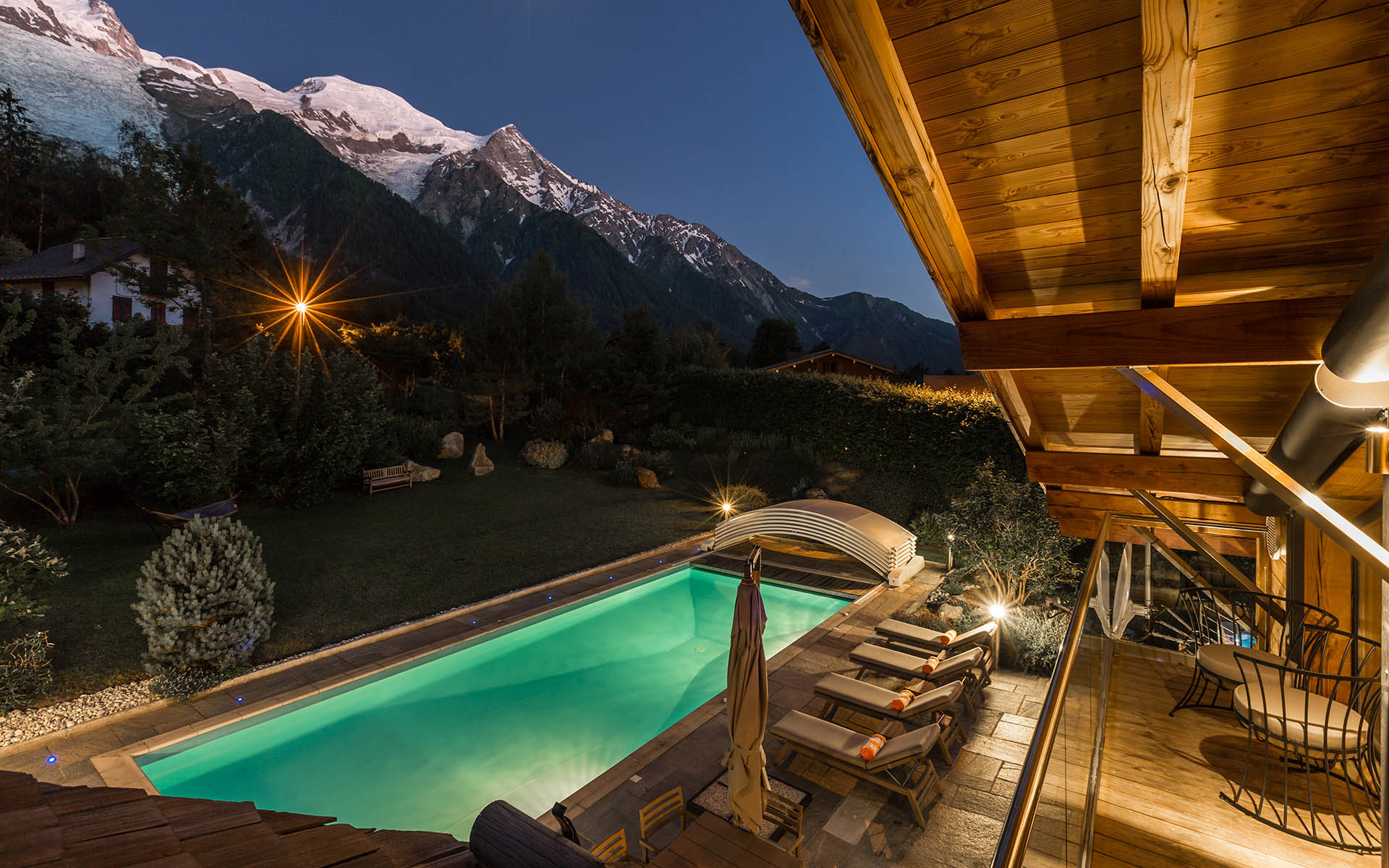
Everyone has different travel preferences, which can be heavily influenced by where they are travelling from. So, we have outlined each of the major routes below. However, for most, the recommended route is to fly into Geneva and then get an airport transfer by car up to Chamonix. This takes roughly an hour and is easily the quickest way to Chamonix.
Chamonix is a rarity as it’s one of the only resorts close to Geneva Airport that still offers high-altitude skiing. It generally takes an hour or so, but please be aware that transfer times may be longer during peak weeks and in poor weather conditions. Hence, Chamonix features in our guide to resorts near Geneva Airport, with several properties in Chamonix featuring in our chalets with short transfer times.
From Geneva, reaching Chamonix by road is usually much faster than travelling by train, so visitors flying into Geneva are generally best served by a private or shared road transfer.
For those avoiding flights or choosing a more sustainable route, Chamonix is accessible by train from cities such as Paris and London. Journeys usually involve a change at Lyon Part-Dieu, Annecy or Bellegarde before continuing to Saint-Gervais-les-Bains.
Saint-Gervais-les-Bains is around 20 minutes by road from central Chamonix and about 10 minutes from Les Houches. Many rail travellers finish their journey here and transfer by road, although it is also possible to take a final train into Chamonix town.
Chamonix sits at the foot of Mont Blanc in the Haute-Savoie region of the French Alps, close to both the Swiss and Italian borders. Courmayeur in Italy is around 30 minutes away via the Mont Blanc Tunnel, while the scenic Mont-Blanc Express connects Chamonix with Switzerland in under two hours.
Chamonix is popular because it is genuinely unique. Its appeal comes from centuries of history as a centre for mountain adventure, exploration and alpine culture.
Few alpine destinations combine such a rich heritage, dramatic scenery and lively atmosphere in quite the same way.
For holidays today, Chamonix offers a buzzing, fully functioning mountain town rather than the feel of a purpose-built ski resort.
This appeal beyond skiing really adds to the experience, making Chamonix a rewarding destination off the slopes and well worth visiting at any time of year.
Chamonix is widely regarded as the birthplace of mountaineering because it was the starting point for the first successful ascent of Mont Blanc in 1786. This achievement helped transform the surrounding peaks into a landscape of adventure and exploration, marking the birth of alpinism.
Its mountaineering legacy was also shaped by the discovery and exploration of the Mer de Glace from 1741, which continuously drew early explorers and wealthy travellers to the valley.
As Chamonix grew into a base for climbers and adventurous visitors during the 19th-century Golden Age of Alpinism, the world’s first professional mountain guiding company was founded here in 1821.
Chamonix stretches along the valley, with ski areas, activities and luxury accommodation spread along roughly 20km, giving it a different layout from many more condensed resorts.
The valley has an efficient public transport network, including regular buses, a train running down the valley and a land train in the centre. If your luxury chalet does not include a driver service, the local transport system makes it easy to explore, and taxis are also readily available.
Many also choose to self-drive, which offers extra flexibility; however, during peak winter weeks, car parks at popular family areas such as Les Houches, Le Tour and Vallorcine can fill quickly, so it is worth arriving early.
Pronounce Chamonix as SHAM-oh-nee. The “Ch” sounds like the English “sh”, and the final “x” is silent
You may also find these articles helpful if you are thinking about visiting Chamonix:
The Best Ski Resorts in Europe
The Best Ski Resorts for Après-Ski
The Top 5 Ski Resorts near Geneva
If you are ready to browse our luxury ski chalets, check out these related categories:

Author
Growing up skiing in the Alps and spending summers sailing sparked a lifelong passion for travel and adventure. Turning a lifelong passion for travel into a career, specialising in luxury ski chalets and summer villas, I love sharing first-hand knowledge to better understand our destinations and shape your next escape.
4 September 2026
View author
Our expert advisers will curate a bespoke shortlist of the finest stays, tailored to your budget and preferences.
 The Best Ski Resorts for Spring Skiing
  Top 7 Apres-Ski Drinks & Recipes for Your Alpine Escape
  The Top 5 Closest Ski Resorts to Geneva Airport
  Geneva Luxury Holiday Guide
  Switzerland Luxury Summer Holidays Guide
  Marbella Luxury Holiday Guide
  Majorca Luxury Holiday Guide
  Ibiza Holiday Guide
  Spain Luxury Holiday Guide
  Algarve Luxury Holiday Guide
  Portugal Luxury Holiday Guide