0
- Ski Chalets
- Villas
- Destinations
- Collections
 Search
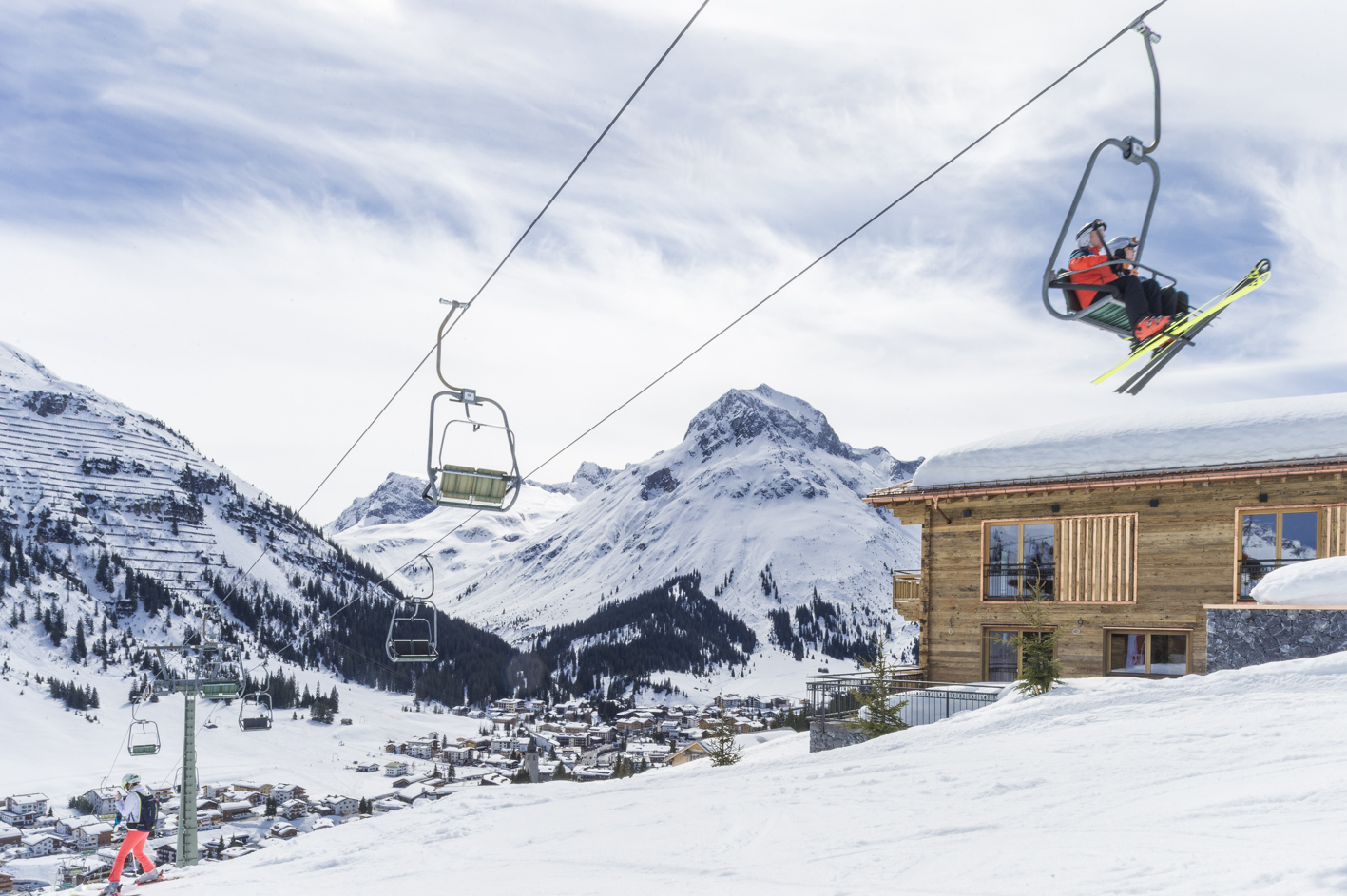
With legendary deep powder snow and royal connections, Lech is one of Austria’s most established luxury ski resorts, combining a traditional mountain village with access to the enormous Ski Arlberg area.
For generations, it’s been known for its sophisticated accommodation and dining and a more refined atmosphere than neighbouring St. Anton, while still offering access to excellent skiing and snow. A favourite of the Dutch Royal Family and, famously, a destination where Princess Diana brought William and Harry as children, Lech is synonymous with luxury.
The village sits at around 1,450m in the Tyrol mountains and is connected to an extensive network of lifts and pistes. Across the wider Ski Arlberg area, there are around 300km of marked pistes, making it the largest interconnected ski area in Austria. There’s also a further 200km of off-piste possibilities in the Arlberg too!
In this guide, we look at skiing in Lech, the different areas in which to stay, when to visit, and what to do away from the slopes.
Browse our collection of luxury ski chalets in Lech and Oberlech, or speak to our ski specialists (+44 203 432 7784) about the best areas and properties for your group.
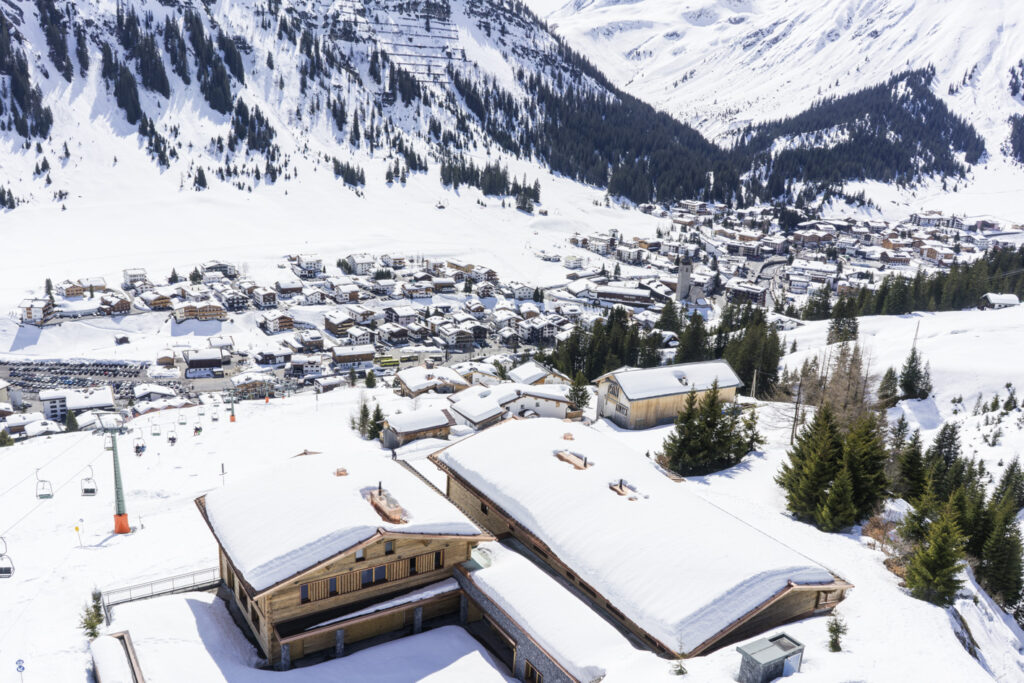
Lech sits at approximately 1,450m and is compact enough that non-skiers can enjoy the restaurants, shops and mountain scenery without needing to ski.
On the slopes, the Ski Arlberg is known for a mixture of wide, well-groomed pistes, varied ski routes and extensive freeride terrain.
The immediate skiing around Lech, Oberlech and Zürs is particularly well suited to intermediate skiers. There is plenty of forgiving blue and red terrain, but also some demanding routes and off-piste skiing for stronger skiers. The wider Ski Arlberg area means that confident skiers can explore further afield, including towards St Anton and Stuben.
There’s quite the distinction between Lech and St. Anton. Both are part of the same ski area, but their atmosphere is certainly different. St. Anton is better known for its lively après-ski and younger, more energetic feel, whereas Lech is generally quieter and more polished. For groups who want excellent skiing alongside good food, quality accommodation and a more relaxed evening atmosphere, Lech is often the better fit.
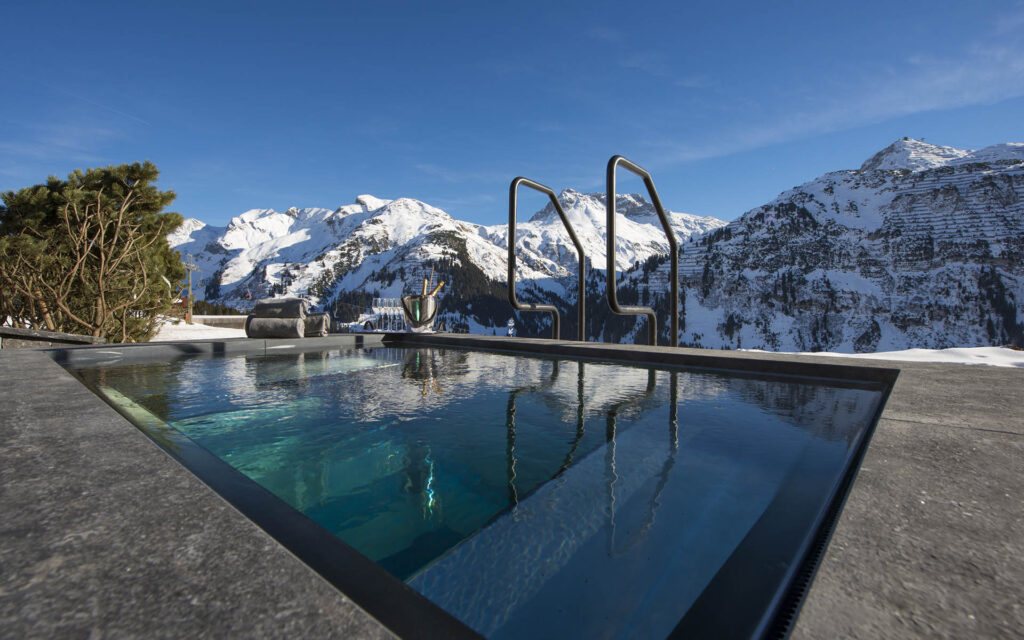
Lech has a particularly strong selection of high-end accommodation, ranging from luxury apartments with shared amenities to some of the largest, fully staffed chalets with extensive private spa facilities.
Our collection includes a range of properties that illustrate the different styles of luxury accommodation available in Lech.
For groups looking for ultimate luxury close to the centre, Chalet Aurelio is connected by an underground passage to the five-star Hotel Aurelio. It sleeps 16 guests and has its own pool, jacuzzi, sauna and cinema, while guests can also make use of the hotel’s facilities and restaurant. It is around a five-minute walk from the centre of Lech, making it a useful option for those who want easy access to the village.
There are also smaller properties in our Lech portfolio for couples and families who don’t need a full chalet. Brunnenhof Penthouse, the crown of the Brunnenhof Residence, is a good example of this. Once a hotel, the building is now a collection of private apartments, with shared access to a spa including an indoor pool, sauna and hammam.
The apartments give the best-of -both-worlds blend of a private property but with hotel-style facilities. They are also better value for guests who still want high-quality interiors, generous living space and wellness facilities, but don’t need a full chalet team or direct access to the piste. They are particularly well suited to families or groups of friends who prefer to set their own schedule and enjoy the freedom of having their own kitchen and living space.
For the most exclusive ski experience, Oberlech is hard to beat.
Sitting above the main village at around 1,650m, Oberlech was once a separate farming community, but today it is effectively a private, car-free, five-star enclave. As it is located on the slopes above the village, its luxury chalets are positioned directly on the pistes, offering prime ski-in/ski-out locations. If you want to step outside in the morning, click into your skis and make the most of skiing in Lech, this is the area to stay.
What makes staying in Oberlech particularly unusual, however, is how you get around when you’re not skiing. As it’s car-free above ground, Oberlech has an underground network of private tunnels connecting many of the buildings. This often means that what appears on Google Maps to be a potentially awkward journey can actually involve a discreet transfer underground to make things shorter.
For this reason, our ski specialists can be useful when comparing properties. We can explain exactly where each chalet sits, how you access it and what the practical journey into Lech’s centre looks like.
For instance, properties such as Chalet Uberhaus and Le Chalet have private drivers who can then take guests between their chalet and the village, using small vehicles and golf buggies for the final stages in the tunnels. It is an undeniably James Bond-like way to get to your chalet, and part of what makes Oberlech feel so private and exclusive.
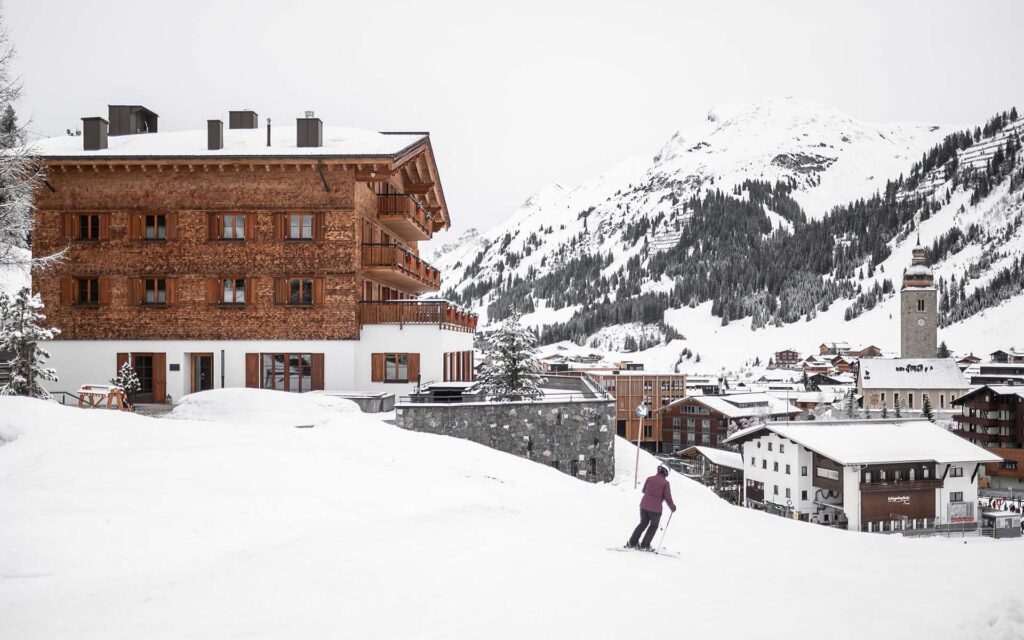
Ultimately, there is no single ‘best’ location in Lech. Oberlech is the choice for effortless skiing, privacy and the extraordinary experience of being able to ski directly from your front door, while the main village works better for those who want restaurants and après-ski within walking distance.
If you are unsure how the different areas compare, our ski specialists can talk you through the locations and explain the practical differences between individual properties. Or the breakdown below might further assist…
Staying close to the main village is the natural choice for groups who want to be close to restaurants, bars, shops and the resort’s central facilities.
Lech has a traditional feel, with the church and village centre forming the heart of the resort. It is more compact than many of the large French ski resorts, so even if the accommodation doesn’t look quite super central, it’s easy to walk between restaurants, shops and lifts.
There’s also a relatively efficient bus system that runs around the village to make journeys easier.
Oberlech sits above the main village and is the area for a hyper-luxury holiday, especially if ski-in/ski-out is a priority.
The major advantage is its position directly on the mountain within the ski area. The majority of properties have pure ski-in/ski-out access straight down to the main lifts in Lech. As the slopes around Oberlech are relatively gentle, this slopeside access is good for all ages and abilities too.
Oberlech has a quieter atmosphere than Lech itself. This makes it particularly appealing to families and groups who want to return directly to their chalet after skiing rather than being in the middle of the village.
In winter, Oberlech isn’t accessible by ordinary road in the same way as the main village, so getting to a chalet here is part of the experience. Depending on the property, guests may arrive by cable car or a private transfer through underground tunnels.
Stubenbach lies further along the valley from Lech and has a noticeably more peaceful character.
It is particularly attractive to guests who want a quieter alpine setting rather than being in the centre of the resort. The village, now more of a suburb, is connected to Lech’s centre by bus or private driver and can also be reached on foot via a gorgeous walking route along the river.
For most visitors, Lech or Oberlech will be the most practical bases, but staying, say, at Severin’s Chalet Residence is worth considering for groups who prioritise privacy and a more secluded atmosphere.
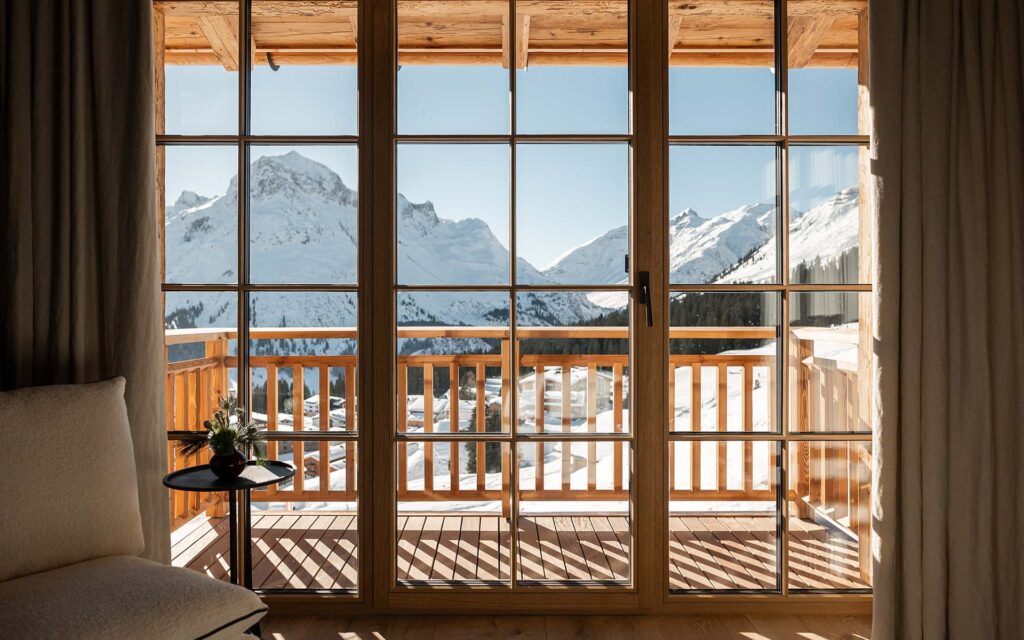
Families benefit from the relatively compact village, extensive ski schools and gentle terrain. Around Oberlech, the availability of ski-in/ski-out chalets also makes the practical side of a luxury family ski holiday considerably easier.
For intermediate skiers, there’s plenty of terrain to explore without needing to tackle particularly demanding runs. Advanced skiers have an even broader range of terrain. The Ski Arlberg is famous for freeriding, and the Langer Zug run above Lech is another proper challenge, with a gradient of up to 80% at points.
Lech is also a strong choice for non-skiers. The village has enough restaurants, shops, spas and winter activities to keep non-skiers occupied. And from a couple of lifts, you can easily reach mountain restaurants to meet skiers for lunch.
What Lech is less suited to is a group whose main priority is late-night après-ski. There are certainly bars and lively spots, but St. Anton is the better choice if nightlife is central to the trip.
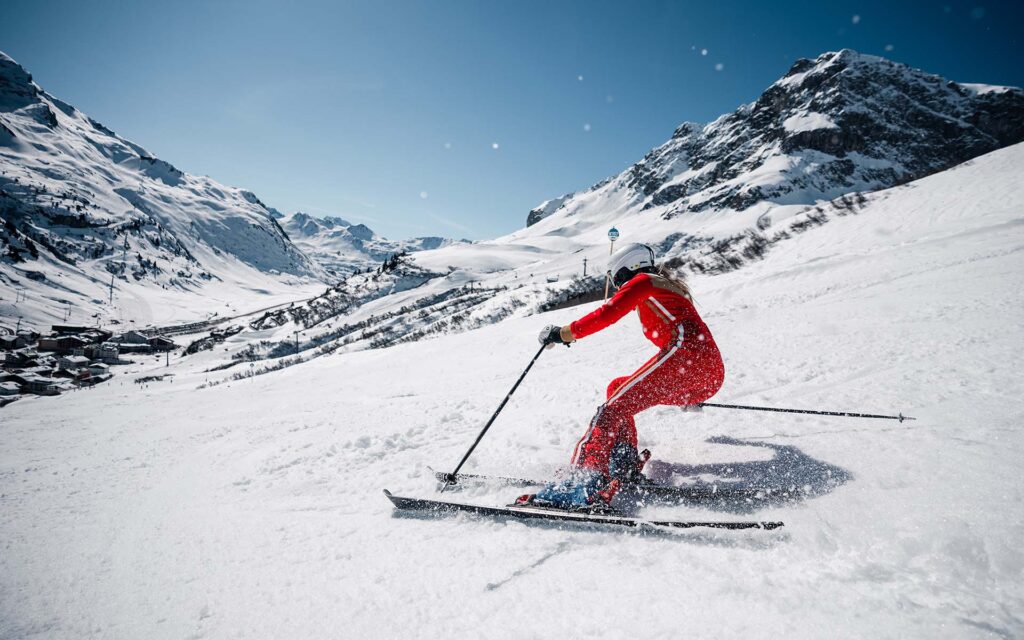
Lech has a long winter season, running from the beginning of December to mid-to-late April. Although the altitude is comparatively lower than other snow-sure destinations, there’s a microclimate around the Arlberg, meaning it’s often cooler (and snowier) at Lech’s 1,444m than in a French resort at a similar altitude. Hence, there’s generally reliable skiing from early winter into spring.
Christmas and New Year are among the most atmospheric times to go skiing in Lech. The cute village and traditional atmosphere are particularly appealing during the festive period. Accordingly, this is also one of the busiest and most expensive times of the season.
January is often a good choice for keen skiers looking for classic winter conditions. The days are shorter, and temperatures can be lower, but the resort tends to feel quieter than during the Christmas and February school holiday periods.
February is another peak period, particularly around half term. Families tend to favour this time of year because of the longer daylight hours and established snow conditions, but demand for the best chalets is correspondingly high.
March is one of the best all-round times to visit Lech. The days are longer, and there is more opportunity to make use of sunny mountain terraces, while the altitude and snow record can still provide excellent skiing. It’s also a particularly good month for groups where skiing, lunch and enjoying the resort are equally important.
April brings a more spring-like atmosphere. Conditions can vary more from day to day, but sunny mornings, quieter slopes and long lunches can make it a very enjoyable time to visit.
The table below shows the average snowfall each month to give you an idea of the strength of conditions across the season…
| Month | Average Snowfall | Snowfall Days |
|---|---|---|
| December | 144cm | 12.8 days |
| January | 180cm | 12.8 days |
| February | 144cm | 13.2 days |
| March | 140cm | 14 days |
| April | 100cm | 10.8 days |
Snow data from snow-forecast.com, averaged from research spanning more than a decade. The weather is different each year, but looking at historic averages, you can get a great idea of what to expect.
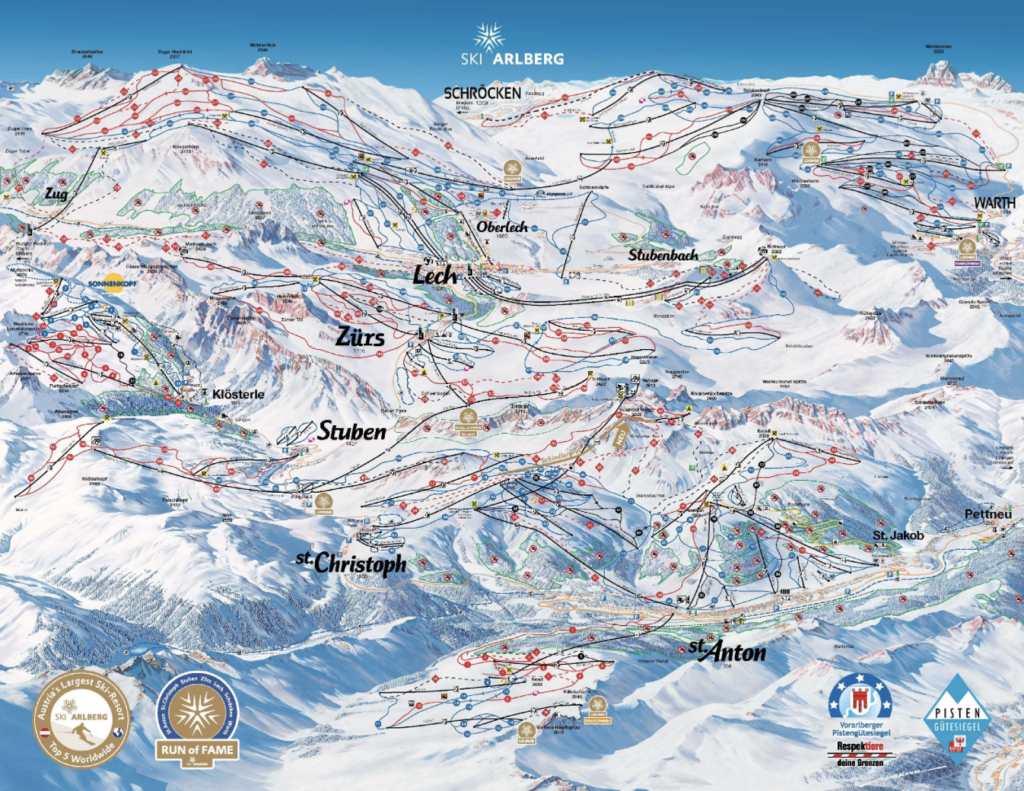
Ski Arlberg is Austria’s largest interconnected ski area, with a modern lift network linking around 300km of marked pistes and providing access to approximately 200km of off-piste. The area connects Lech and Oberlech with Zürs, Stuben, St. Christoph, St. Anton and Warth-Schröcken.
The slopes immediately above Lech and Oberlech are broad and generally approachable, making this one of the best areas for getting your bearings at the start of a holiday. For confident skiers, the area also provides straightforward links towards Zürs and Zug.
The connection between Lech and Zürs is the basis for the White Ring, which takes skiers through some of the most scenic terrain around the resort. The slopes around here are generally more varied and provide a natural progression from the easier pistes around Oberlech.
The White Ring is probably the most famous ski route associated with Lech. The circuit (combining several lifts and runs) links Lech, Oberlech, Zürs and Zug and covers approximately 22km and around 5,500m of altitude difference. The route is manageable for confident intermediates and is as much about the scenery and viewpoints as the skiing itself, with several places to stop for lunch or a drink. It’s primarily a nice excuse to have a route in mind to follow for a day.
| Ski Lift Type | Count |
|---|---|
| Gondolas & Cable Cars | 17 |
| Chairlifts | 43 |
| Drag Lifts | 28 |
Lech has a long-established ski-school tradition. The first ski lesson in the Alps is recorded as having taken place in Zürs in 1906, and the resort now has a choice of established ski schools and independent instructors offering everything from children’s group lessons to private tuition and off-piste guiding.
For experienced skiers, it can be really worth booking a private guide. Several local providers specialise in off-piste guiding and ski touring, allowing instructors to choose terrain according to the conditions and the ability of the group.
During peak weeks, particularly Christmas, New Year and February half term, it is advisable to arrange ski school well in advance, often not long after securing your perfect chalet and flights.
Strolz Ski Rental is one of the best-known names in Lech and is located in the centre of the village. It offers ski and snowboard hire alongside fitting and servicing, with equipment from leading brands. Skibex is another specialist option, with a focus on modern equipment for piste skiing, freeriding and ski touring.
Most rental shops allow equipment to be reserved online in advance. For families, this is particularly useful as children’s equipment can be prepared before arrival, reducing the amount of time spent in the shop on the arrival afternoon or first morning.
The Ski Arlberg lift pass gives access to the entire interconnected Ski Arlberg area and is the natural choice for most visitors staying in Lech for a week. This leaves you free to move between Lech, Zürs and the wider Arlberg according to snow conditions and the ability of your group.
If you aren’t sure how many or which days you will be skiing, it’s still worth securing your pass in advance. Lech caps the number of daily lift passes that can be purchased (max. 14,000 each day). This is to help with congestion on the slopes, queues at the lifts, and overall reflects skiing in Lech as an exclusive enterprise.
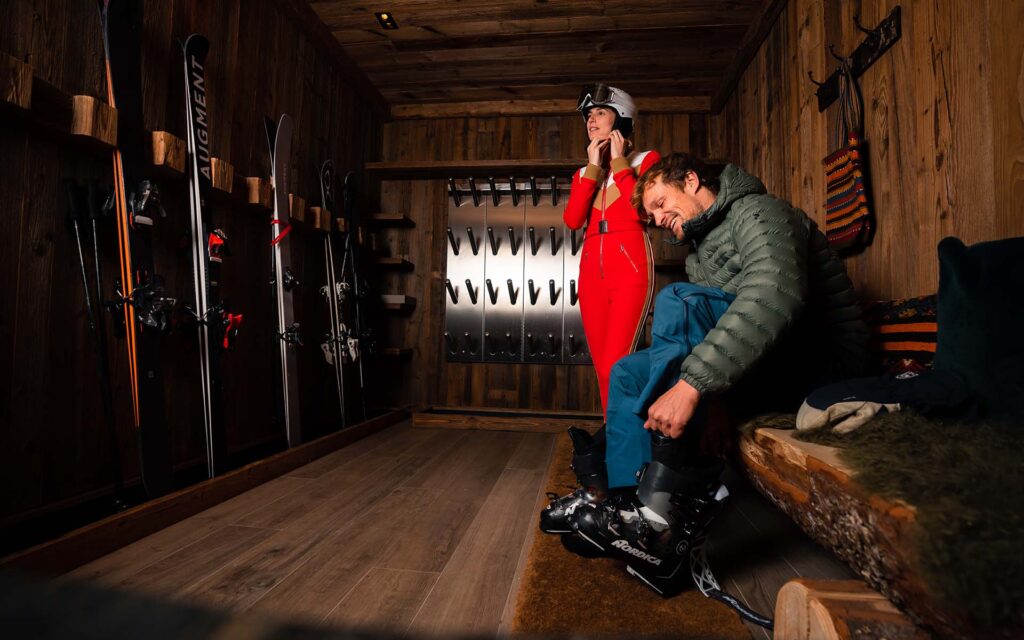
Lech is a nice choice for beginners, particularly around Oberlech with several gentler slopes. With two dedicated beginner areas right near the centre of the village, first-timers can get started within moments of their accommodation or while parents are enjoying the village centre.
Like most ski resorts in Austria (and Switzerland, Germany and Italy), Lech starts its grading at a ‘blue’ ability. Therefore, although there doesn’t appear to be any easy ‘green’ runs on the piste map, there are a good number of easy blue slopes suitable for beginners.
Several cruisy, rolling blues such as Blue 200 (Schlegelkopf) & Blue 201 (Rudalpe / Schlegelkopf) are nice and wide with some lovely views and lead straight back to the centre too. These are great for beginners to progress onto in the immediate area without needing to travel long distances.
There’s a large amount of blue and red terrain, and the interconnected nature of the local ski area means that you can cover a lot of ground without repeatedly skiing the same runs. The White Ring is an obvious highlight, especially earlier in the day.
Generally, around Zürs and Zug, there are several sweeping red runs that are typically a bit quieter. Try the routes off the Zuger Hochlicht & Steinmähderbahn.
Once you are comfortable navigating the Ski Arlberg, stronger intermediates can start exploring further afield towards St. Anton, which offers more challenging terrain.
Lech is sometimes perceived primarily as a family and fancy, luxury resort, but the wider Ski Arlberg has a very good amount of advanced terrain for serious skiers.
Although a lot of the grading on the piste map looks blue and red in ability, some of those red runs are deceptively tough. Plus, the main draw for advanced skiers is off the marked pistes anyway!
Advanced skiers would get a lot from a local guide to show them the best off-piste routes.
The skiing around Stuben and St. Anton is particularly well known for more challenging runs and the best off-piste. Or, a favourite is directly under the St. Christophbahn chair leading out from St. Christoph. As long as you’re okay with people watching from the lifts!
Closer to Lech, the Langer Zug is one of the resort’s best-known challenges. The route drops from the Rüfikopf area and, in the upper gully section, reaches gradients of 80%, making it one of the steepest groomed ski routes in the world.
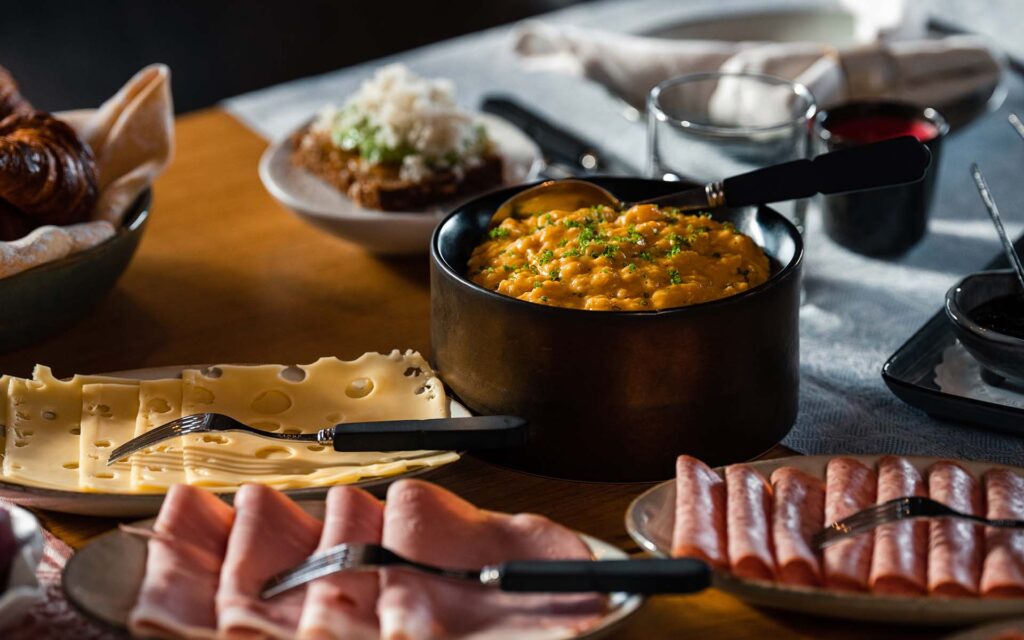
Ever the luxury resort, there’s more to Lech than its sublime skiing. Groups are often attracted to the resort more by what’s off the slopes than on them.
Après-ski in Lech is generally more sophisticated and relaxed than the famously boisterous scene in St Anton. There are certainly places to have a lively drink at the end of the day, but Lech tends to favour long lunches, champagne on sunny terraces and an early-evening drink before dinner rather than all-out partying until late.
Balmalp is one of the best-known lively mountain venues located at around 2,100m above Zug. Its large south-facing terrace has impressive views, often with music and a buzzy atmosphere alongside the food and drinks. It also has a Moët & Chandon lounge and a champagne gondola – how very Lech!
Closer to Lech, Schlegelkopf Restaurant-Bar is another good option directly beside the Schlegelkopf lift, with a large terrace overlooking the pistes and village. It’s particularly convenient for those who want to finish skiing and have a drink on the mountain rather than heading immediately back into the village or to their luxury chalet.
For something closer to the village, the K.Club is a good option for an evening drink, while Hus Nr. 8 has a more traditional bar atmosphere and stays open later than many of the mountain venues.
Overall, though Lech is better suited to long lunches, a drink in the afternoon and relaxed evenings than to very late nights.
Lech has a very strong reputation for high-quality food, with a combination of traditional family restaurants, sophisticated 5* hotel dining and mountain eateries.
On the mountain, the choice ranges from traditional huts to more contemporary restaurants. Balmalp, again, is particularly well known for its terrace. This is the spot for a long lunch that then gets lively. It is also accessible to non-skiers via the Zugerbergbahn (a 5-minute drive from Lech), which makes it useful for groups where not everyone is skiing.
Rüfikopf Panoramarestaurant offers a very different experience. At 2,350m, it has one of the more dramatic viewpoints above Lech and serves Austrian specialities including Kaiserschmarrn, Brettljause and freshly baked cakes, alongside more casual dishes.
For dinner in the village, Krone-Stuben is one of Lech’s established fine-dining addresses. Located in the Hotel Krone in the centre of the village, it has been awarded three Gault&Millau toques. There is also a separate fondue room for a more traditional evening, serving cheese fondue, raclette and meat fondues.
Wellness is a significant part of the luxury Lech experience. Many of our luxury chalets and apartments in Lech have private or shared spa facilities.
The focus on wellness is particularly noticeable in the ultra-luxury properties in Oberlech, where many chalets themselves, and their stays, are designed around spending as much time indoors as outdoors. Properties such as Chalet 1551 and The Arula Estate have extensive spa facilities and tried-and-tested in-house staff that rival those of larger hotel names.
Lech is particularly good for winter walking, so non-skiers can stay occupied.
There are marked trails around Lech, Oberlech and Zug, including the route between Lech and Zug through the forest. Or a particularly lovely and gentle route is along the river from Lech village centre to Stubenbach. This is only half an hour or so each way. You could always break in Stubenbach at the bakery there or at the Be Fame Arlberg restaurant too.
For a quieter alternative to downhill skiing, there are cross-country routes through the Zug valley and around Zürs. The Zugertal is particularly scenic, with trails following the valley through a more peaceful landscape away from the main ski area. There is also a route between Zürs and the Flexenpass.
Lech offers a range of other winter activities. There’s a natural, open-air ice rink in the village centre, or the Aktiv Hotel has the only hotel-owned ice rink in Europe (open to outside guests).
There are also options for characterful horse-drawn sleigh rides around the town. Or tobogganing near the village centre or up in Oberlech.
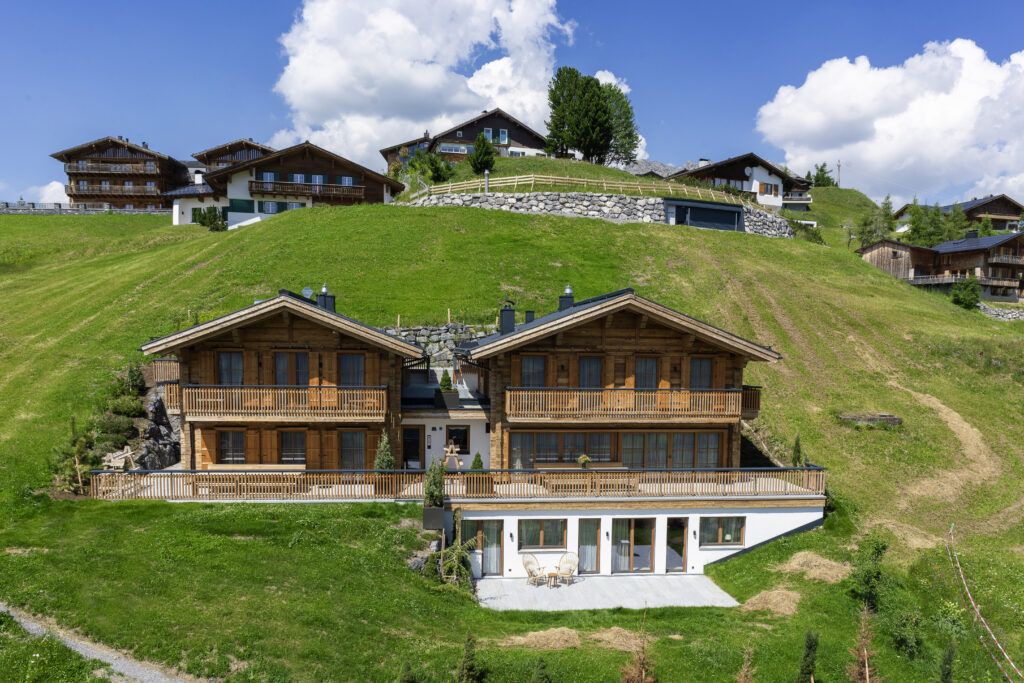
Locals love it in Lech in summer and often encourage groups to take a trip to Lech in summer to really understand it. Summer in Lech is considerably quieter than winter, making it appealing for those who enjoy hiking, cycling, mountain scenery and good food without the crowds associated with the ski season.
The Green Ring (sound familiar?) is one of the area’s best-known summer routes. It follows the landscape around the skiing White Ring route, with themed stages and stories connected to the mountains. The complete route is approximately 28.5km.
There are also numerous hiking routes around Rüfikopf and the surrounding peaks, while the River Lech and the wider Lech valley provide opportunities for outdoor activities away from the high mountains.
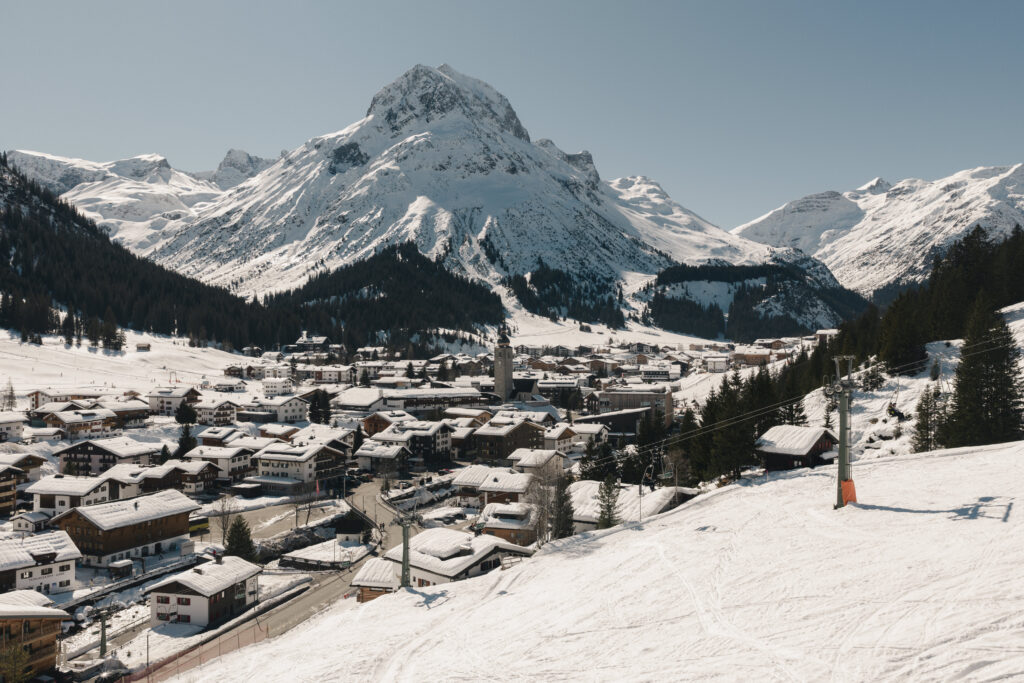
The nearest airport is Innsbruck, which is 1 hr 35 mins away. Zurich Airport is a 2 hr 20 mins drive away, and Friedrichshafen Airport is 1 hr 50 mins away. By rail, the nearest stations are Langen am Arlberg and St. Anton. From there, it is about a 30-minute drive to connect onwards to Lech.
For guests staying in Oberlech, arrival is slightly different. Some properties arrange transfers directly, while others use the cable car from Lech.
Yes. Lech has access to one of Austria’s largest interconnected ski areas, with around 300km of marked pistes across Ski Arlberg. It is particularly strong for intermediate skiers, while advanced skiers have extensive freeride terrain and access to St. Anton.
The Arlberg technically refers to the wider mountain region and mountain pass between Tyrol and Vorarlberg in Austria. Meanwhile, the Ski Arlberg is the name for the pass and interconnected ski area that sits within this region, linking the major ski areas of St. Anton, St. Christoph, Stuben, Lech, Zürs and Warth-Schröcken under one ski pass.
Generally though, many refer to ‘Arlberg’ as reference to the skiing area so, the ‘Ski’ is often dropped in discussions without losing understanding.
Yes. The slopes around Lech and Oberlech have a good amount of gentle terrain and dedicated learning areas, making the resort well-suited to families and learning skiers.
Very much so. The wider Ski Arlberg is one of Austria’s most plentiful and well-known freeride areas, with around 200km of terrain accessible. Langer Zug above Lech is also one of the steepest groomed ski routes in the world.
It depends on what you want from your holiday. Both have access to the wider Ski Arlberg area, but Lech is generally quieter and more polished, with a stronger emphasis on luxury accommodation, restaurants and a traditional village atmosphere. St. Anton is better known for lively après-ski and nightlife.
Yes. The resorts form part of the same Ski Arlberg area and are connected by lifts and pistes. In comparison to other major ski resorts that share the same ski area, the journey is a bit longer between Lech and St. Anton than between, say, Méribel and Courchevel. It is best treated as a full-day excursion to explore that side of the ski area rather than a quick pop over the hill.
Lech has a strong reputation for snow reliability; helped by its microclimate, it typically has a very strong snow record. Skiing generally runs from early December into mid-to-late April.
Yes. The village has a good range of restaurants, shops, and spas, and there are several pedestrian-friendly lifts that allow non-skiers to access viewpoints and mountain restaurants. Winter walking and snowshoeing also provide plenty of ways to experience the landscape without skis.
Lech sits firmly towards the upper luxury end of the market. Accommodation, particularly large catered chalets and five-star hotels, can be very expensive during peak periods. There is a broader range of accommodation in the resort, but the best luxury properties command premium rates during peak weeks. A trip to St. Anton is typically better value if you want to ski the Arlberg but want more for your money.
The combination of a traditional village, high-end accommodation, extensive skiing and relatively restrained après-ski makes Lech distinctive. It has the scale of accommodation, restaurants and activities of a major ski area without feeling too busy or like a purpose-built resort on the ground.
Whether you are looking for a private ski-in/ski-out property in Oberlech or a smaller base close to the village, we can help narrow down the options according to your group, dates and priorities.
Browse our luxury ski chalets in Lech and Oberlech or contact our ski specialists to discuss your next trip to the Arlberg.
Luxury Ski Chalets in St. Anton
Author
Growing up skiing in the Alps and spending summers sailing sparked a lifelong passion for travel and adventure. Turning a lifelong passion for travel into a career, specialising in luxury ski chalets and summer villas, I love sharing first-hand knowledge to better understand our destinations and shape your next escape.
6 October 2026
View author
Our expert advisers will curate a bespoke shortlist of the finest stays, tailored to your budget and preferences.
 The Best Ski Resorts for Spring Skiing
  Top 7 Apres-Ski Drinks & Recipes for Your Alpine Escape
  The Top 5 Closest Ski Resorts to Geneva Airport
  Geneva Luxury Holiday Guide
  Switzerland Luxury Summer Holidays Guide
  Marbella Luxury Holiday Guide
  Majorca Luxury Holiday Guide
  Ibiza Holiday Guide
  Spain Luxury Holiday Guide
  Algarve Luxury Holiday Guide
  Portugal Luxury Holiday Guide