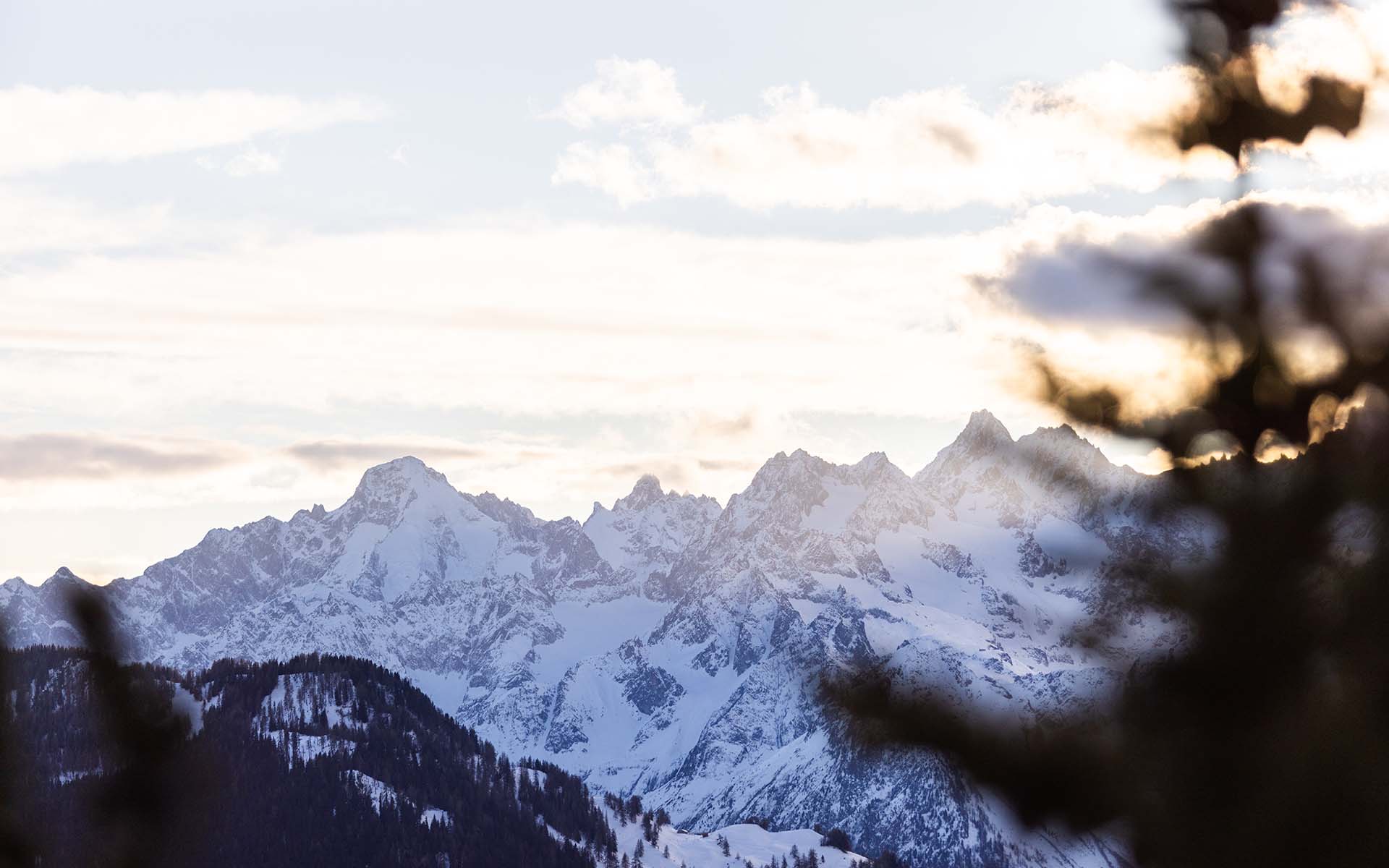
Verbier has a reputation for big skiing, big views and big après-ski, but there is more to the resort than steep descents and expensive champagne.
Part of Switzerland’s 4 Vallées ski area, Verbier sits on a sunny plateau above the Val de Bagnes, with views across the Grand Combin massif. It’s a particularly pretty resort with a good choice of mountain restaurants, a sociable village centre and an impressive collection of luxury chalets. It’s particularly well suited to groups with a mix of confident skiers and people who want to spend just as much time enjoying long lunches as they do on the slopes.
For confident skiers, the appeal is obvious: wide, long pistes, challenging itinerary runs, and a substantial amount of off-piste terrain to explore. Families and mixed-ability groups can also have a great week here too, though.
In this guide, we look at skiing in Verbier, from the different sectors of the mountain and the best pistes for different abilities to the realities of finding a well-located chalet, enjoying the après-ski scene and choosing when to visit.
Browse our collection of luxury chalets in Verbier or speak to our ski specialists (+44 203 432 7784) about the best areas and properties for your group.
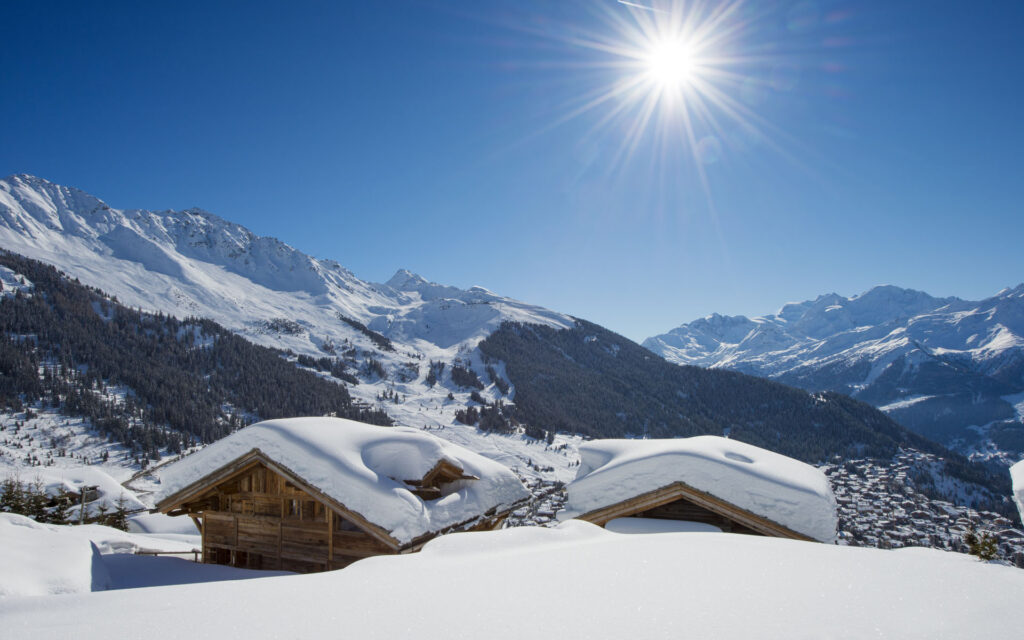
Verbier’s appeal comes from the variety of its terrain, its varied village and lively atmosphere.
The main resort sits at around 1,500m, while the ski area reaches a dizzying 3,330m at the top of Mont-Fort. The wider 4 Vallées network includes the smaller hamlets and villages of La Tzoumaz, Nendaz, Veysonnaz and Thyon, with around 410km of pistes across the linked area. This gives confident skiers plenty to explore over a week, though, notably, exploring across the 4 Vallées feels a lot more like a journey than other ski areas of similar sizes.
The skiing immediately around Verbier is divided broadly into several main areas. Médran is the principal lift hub, taking skiers up towards Les Ruinettes. From there, you can continue towards Attelas or La Chaux to get to parts of the upper mountain. Or, if you’re staying closer to the Savoleyres lift in Verbier, you can ski this side of the ski area which connects to the hamlet of La Tzoumaz
For advanced skiers, Mont-Fort and Mont-Gelé are the big names both as peaks and for their freeride itineraries. The bowl between Attelas and Chassoure is the best spot for laps of cruisy blues, especially enjoyable for intermediates. Meanwhile, beginner skiers are better off starting in the dedicated learning area Les Esserts or progressing to Le Rouge.
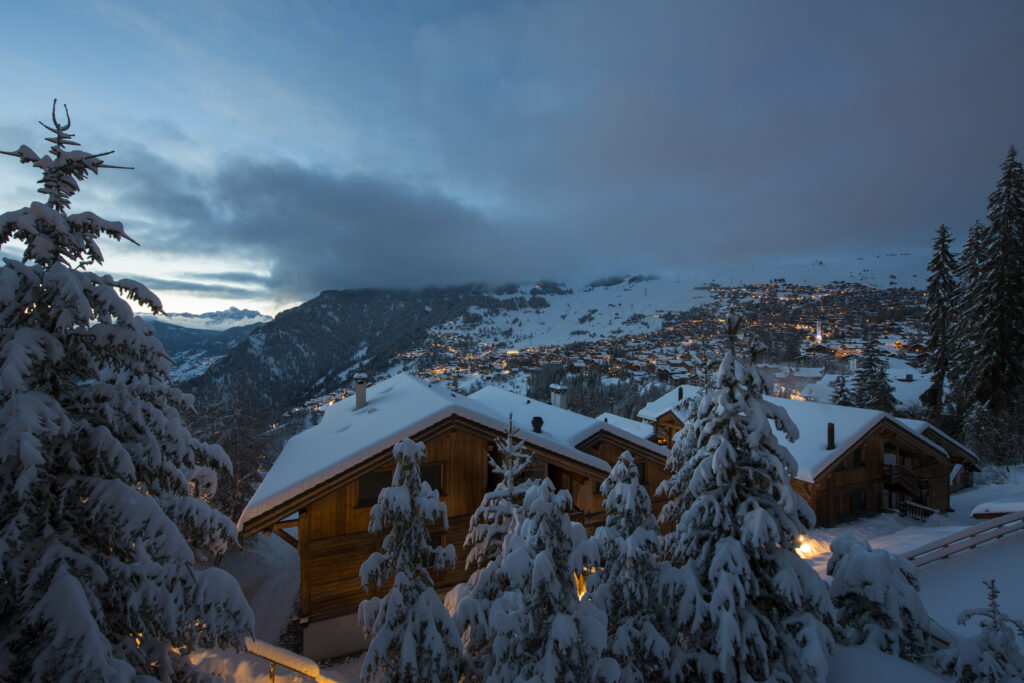
We love the variety. Verbier has a well-earned reputation among experienced skiers, but it isn’t exclusively a destination for experts. There are dedicated, separate beginner areas and some long, cruisy runs too.
The mountain restaurants are another highlight. There are plenty of places to stop for a relaxed lunch, whether you’re after a simple plate of rösti, a traditional Valaisan meal or a longer lunch on a sunny terrace. Le Dahu at La Chaux and Le Carrefour above the village are two established choices.
The après-ski scene is lively without requiring every evening to turn into a late night, although that’s certainly possible too if you want!
Verbier has an international, sociable feel, with plenty happening after the lifts close. The Verbier International School, and the families it attracts, definitely helps contribute to the social, cosmopolitan feel. Being that it’s a destination that people live in all season and year-round, there’s plenty off the slopes for any non-skiers.
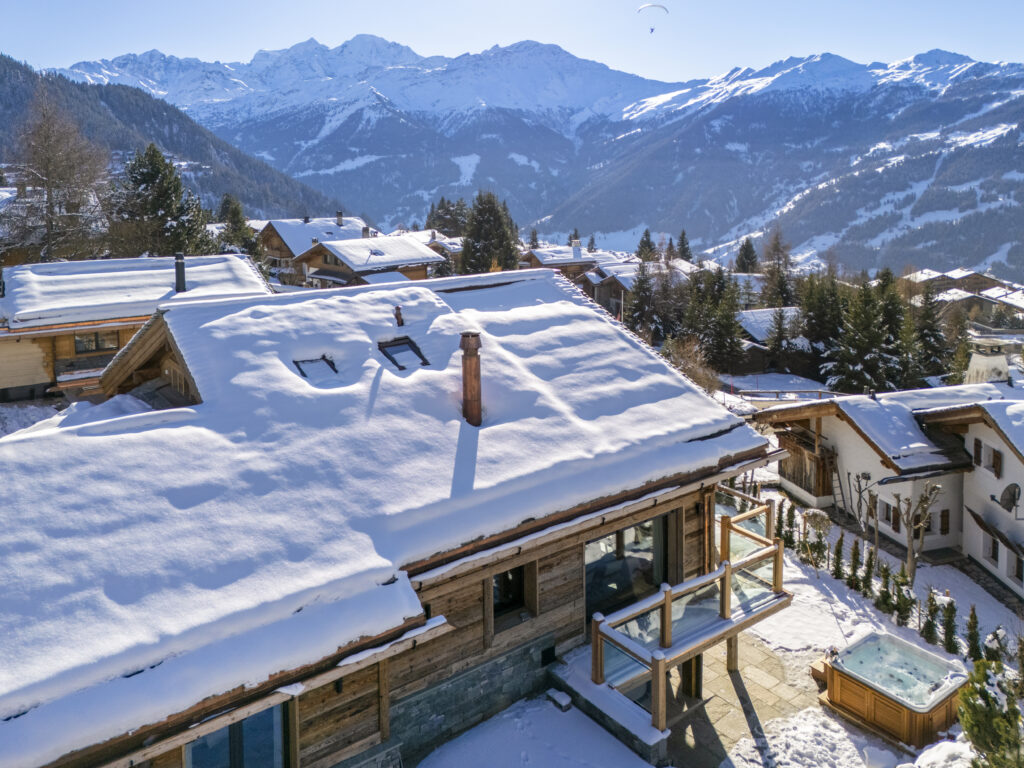
When it comes to accommodation, Verbier has a particularly impressive collection of luxury private chalets. Many come with their own swimming pools, private spas, cinemas and outdoor hot tubs, while dedicated chalet teams, private chefs and in- resort drivers make everything feel wonderfully easy.
If you’re looking for a standout option, Chalet Marmottière is quite something. Made up of two connected buildings, it sleeps up to 18 guests and has an almost endless list of facilities. There’s a 17-metre indoor swimming pool, outdoor hot tub, hammam, sauna, bowling alley, cinema and even a poker room. It’s the sort of chalet where you could happily spend just as much time enjoying everything back at home as you do out on the slopes.
For larger groups looking for something special, The Alpine Estate, made up of two connected chalets (Chalet Norte and Chalet Sirocco) is a particularly impressive option. Between the two chalets, you can sleep up to 20 guests across 1,500m2 living space with two indoor swimming pools, multiple spa areas, cinema rooms and a fabulous wine cellar. For even larger groups, Chalet Calima is located next door to the Alpine Estate, sleeping an additional 8 guests.
Catered chalets are particularly attractive for groups who want everything to be easy and taken care of. This is often especially the case for groups with children or a mix of ages, as having the chalet staff and most meals taken care of at home can make the week much easier. It’s also a good fit for those who want to spend evenings enjoying the chalet’s facilities rather than going out every night.
Self-catered accommodation offers more flexibility. Verbier has a very good restaurant scene, with everything from traditional Swiss cooking to contemporary dining, so there is plenty of reason to eat out during the week. It can also suit groups who prefer informal evenings and don’t want to work around a set dinner time.
There are relatively few chalets that are truly ski-in/ski-out. The skiing in Verbier doesn’t equate directly to the resort and chalet development. Ultimately, Verbier’s layout is not built entirely around the pistes, and many luxury chalets are located where reaching the main lifts (Médran) requires a short drive.
It’s also really worth noting the distinction between the main mountain and the beginner slopes. Les Esserts, for instance, is the main learning area but isn’t as easily linked to the main network and Médran lift as you might think. So, a chalet beside Les Esserts may offer direct access to skiing for beginners, and you can technically ski in, but it isn’t quite as simple as skiing out the door and down to the main lift hub, like if you were staying in a luxury chalet on the Bellecôte in Courchevel 1850.
Chalet Makini, for example, is near Les Esserts. Skiing back may be possible in certain conditions, but a snow-dependent off-piste route is not the same as a groomed run connecting directly to the main ski lifts. Starting your ski day from here in the wider 4 Vallées area, you would want to make use of the private driver service.
If your priority is having the most convenient access to the wider ski area (more so than a beginner’s slope), then it’s worth thinking about properties that are as close to the Médran as possible, such as Chalet Max or Penthouse Place Blanche. Even if they don’t market themselves as ski-in/ski-out, their location is almost more advantageous.
For many groups, a chalet with a dedicated driver is the most practical solution. It opens up a wider choice of properties and makes morning drop-offs, ski-school arrangements and returns from après-ski much easier. Some properties, even offer this service 24hrs since, Verbier does have quite the nightlife scene too! Unlike other larger resorts, driving around Verbier, you’re never far away from the centre and actually not in the car at all.
Ultimately, especially in Verbier, the best chalet for your group is not necessarily the one closest to a slope. Getting bogged down with ski-in/ski-out in your accommodation search in Verbier certainly isn’t necessary, as the best property for you is often the one that gives you the space, service and facilities you want for the rest of the holiday.
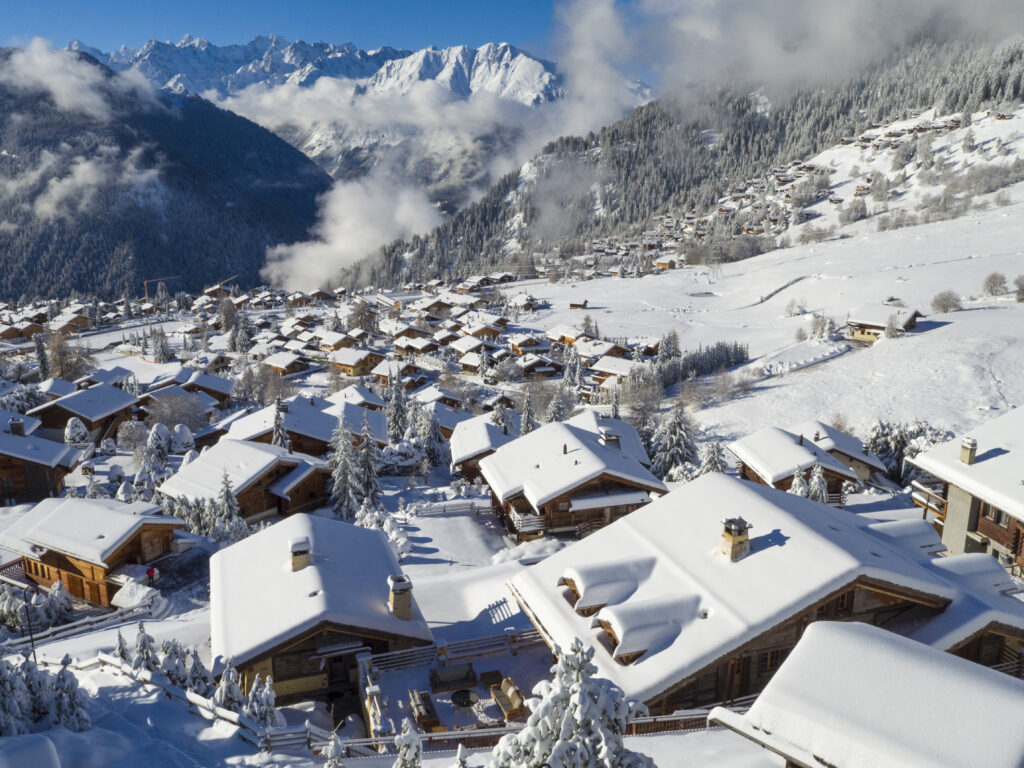
In your accommodation search, you might find ‘Place Centrale’ mentioned a lot.
Place Centrale is the main public square and is considered the main centre and heart of Verbier. If you want to be near the main convergence of restaurants, bars and shops, then you want to be near Place Centrale. A central property can make it easy to go out for dinner or enjoy après-ski without needing a driver. However, if you’re staying a bit further out, it is often only a short drive or bus journey into town too.
Place Centrale is the reference point for the centre of village life but, unlike some purpose-built ski resorts, this isn’t immediately connected to the skiing and snow front.
About 500m up the road is the Médran: the main lift station in Verbier. From the valley bottom, the Le Châble–Verbier gondola leads straight up into the Médran lift station. Then, here the Médran lift leads up into the main, wider ski area.
For groups who have more of a priority on skiing, it’s worth looking at how far away from the Médran you are rather than from Place Centrale.
Les Esserts is particularly relevant for families and beginners because this is the main nursery and learning area. If you’re just starting out, you would have lessons at Les Esserts. It’s a very wide, gentle slope with a drag (button) lift, perfect for learning the very basics and initial stages.
Staying near here can be particularly useful if you have children or beginners taking their first lessons or wanting to practise a lot on a gentle slope.
The important caveat is that Les Esserts is not directly interchangeable with the main ski network. Staying beside a beginner slope can be convenient for lessons, but more experienced skiers will need to consider how they get to the main lifts each morning. This is also where you take ski-in/ski-out descriptions with a pinch of salt…
Les Esserts is not wholly and fully connected with the main ski area. Yes, you can ski out of some luxury chalets, but this would only lead you down this nursery slope to the drag (button) lift at the bottom. Great if you’re a beginner and want to lap this area or have initial lessons, but less so if you actually want access to the wider 4 Vallées ski area and make the most of skiing in Verbier; then, it’s not ski-out for that.
Technically, you can ski-in to chalets around Les Esserts however, this piste is from the Savoleyres section of the ski area so again, not as easily connected to the main skiing in Verbier you’d likely be doing day-to-day. This piste down to Les Esserts is also a long, flat, winding cat track, so pretty unstimulating and very flat for any snowboarders in the group.
Le Rouge is a lovely area to stay in, particularly if you’re a beginner or have mixed abilities in your group. There’s a gentle learning slope with a drag lift right on your doorstep, which leads up towards Carrefour, a real focal point in this part of the mountain. Carrefour is a great spot for a mountain lunch, whether you’re skiing or simply coming up via road to enjoy the views and atmosphere.
Technically, Le Rouge offers ski-in/ski-out access to the main ski area. You can ski out from the area, take the drag lift up and then follow a run down towards the Médran lift station. That said, if your chalet comes with a driver service, I’d personally just get them to drop you at Médran. The drag lift is quite a slow way of getting onto the mountain, and heading straight to Médran means you can avoid a bit of unnecessary faff and hopefully get ahead of some of the queues at the main lift station.
Les Moulins is the third of Verbier’s beginner areas and very much a little neighbourhood learning zone (not connected to the 4 Vallées). The main ski school lessons are centred around Les Esserts, so Les Moulins is more of a small local bonus for families and little ones finding their feet.
If the right luxury chalet for you happens to be here, it’s lovely to have a drag lift and a little skiing practically in your garden, but it isn’t an area I’d focus your chalet search around.
Savoleyres refers to the lift and peak on the other side of Verbier to Médran and the main centre.
The Savoleyres lift takes you up to a different side and a quieter, near-independent section of the 4 Vallées ski area, which connects with La Tzoumaz on the other side of the mountain.
It offers a different feel to the majority of the skiing in Verbier with gentler terrain, lots of rolling blue and red runs and a nice mix of open pistes and tree-lined runs. This makes it particularly good for intermediates looking to build confidence. The north-facing slopes here tend to hold their snow well, and the tree-lined lower pistes are particularly lovely on snowy or poor-visibility days. There are also some good off-piste opportunities for more experienced skiers when conditions allow.
Luxury chalets around Savoleyres, as it’s a little further out and built up into the hillside, often offer a lot more space, privacy and the best sweeping views. Many of the properties are offered with driver services as part of their rental. Staying around Savoleyres, you’re obviously very close to this lift and section of the ski area, and it’s often under seven minutes to the main Médran station or Place Centrale from here too. You really aren’t as far removed as it can look on a map!
Skiing around Savoleyres and La Tzoumaz is a good choice if you want to explore more than the main Verbier slopes around the centre and escape some of the crowds. It’s a lovely alternative side of the mountain, with a much more relaxed feel.
Staying in a luxury chalet in La Tzoumaz can offer fantastic value for the level of luxury, with access to the wider 4 Vallées ski area. However, it’s important to understand the geography. You’re on the other side of the Savoleyres mountain, so while you can ski the Savoleyres and La Tzoumaz slopes, you’ll need to ski down and take a bus around to Médran or Le Rouge to access the rest of the 4 Vallées.
You can technically ski back to La Tzoumaz via an itinerary run, but in reality, it’s a much more separate base. With a whole mountain between you and Verbier, you won’t be popping into the village for après-ski or dinner, as the drive is 45 minutes or so around and down the mountain.
Just across the valley from Verbier, on the opposite side of Le Châble, is the Bruson ski area. It’s a little hidden gem and a world away from the busier skiing in Verbier.
It’s particularly good for powder days, and because it sees far fewer skiers, you can often still find fresh tracks several days after snowfall when the majority of the skiing in Verbier is tracked out in a morning.
If you’re having just a week in Verbier (especially on a first visit), you wouldn’t miss not going to Bruson. However, if you’re having a longer stay or the weather works out well, and you’re big skiers wanting the powder, then it’s worth heading over.
Bruson is also popular with ski tourers, with a number of routes taking you up into the surrounding mountains and some beautiful backcountry terrain to explore. It has a much more peaceful, traditional alpine feel, making it a lovely alternative to the main 4 Vallées area. You can access it via the gondola from Le Châble, so it’s relatively easy to get to from your luxury chalet in Verbier.
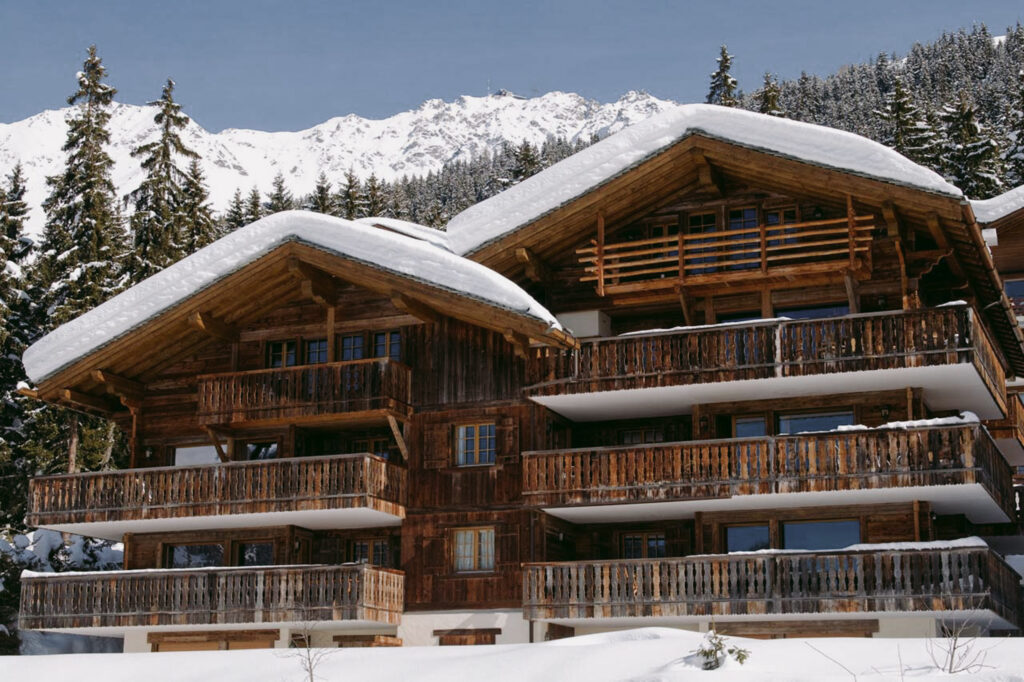
Verbier works particularly well for confident skiers, groups of friends and families who want a combination of skiing, good food and a lively atmosphere.
Advanced skiers are drawn to the steep pistes, high peaks and the marked itinerary runs. Intermediates can enjoy a varied week exploring around Attelas, La Chaux and on the Savoleyres side, while beginners have dedicated learning areas where they can start from scratch in peace.
Mixed-ability groups can have a successful holiday here, but planning helps. Beginners may need to spend the first few days around Les Esserts or Le Rouge, while stronger skiers can head higher up the mountain. Agreeing on meeting points for lunches and arranging that with your chalet driver makes it easier.
Or many mixed groups tend to be happy having separate days where everyone can enjoy their own pace. It means there’s a lot to chat about around the dinner table with different tales of everyone’s different, perfect days skiing in Verbier.
Verbier is a good choice for those who care just as much about what’s happening after the lifts stop. The village has a very well-established après-ski scene with drinks and liveliness leading into the evening, with many choices for bars and clubs. For a more civilised time both on and off the mountain, there’s a very strong choice of restaurants, from casual venues to more formal dinners.
There’s plenty to keep non-skiers happy in Verbier too, from beautiful winter walking routes and excellent wellness facilities to shopping, restaurants and mountain lunches, many of which are easily accessible by lift. It’s a resort with a good amount going on beyond the pistes, although its identity and overall appeal are still very much centred around the mountains and skiing.
Verbier generally opens its lifts for weekend skiing from mid-November, with the full area opening daily from early December until late April. Its super high altitude helps with its long season, but the range in altitude from the peaks above 3,000m to resort level at 1,500m means that conditions obviously vary significantly between the village, lower learning slopes and the upper mountain.
Christmas and New Year are among the busiest and most expensive periods. The village has a very festive atmosphere, and it’s a popular time for those after a magical, Swiss chocolate box holiday.
January can be a good choice for keen skiers as it’s outside the main holiday periods. Temperatures are often colder, although daylight hours are shorter. February is popular with families during school holidays, with high demand for chalets and lessons. Your biggest lift queues would be in February, which often go viral on social media, so if you can avoid travelling over this period, it’s best!
March is a particularly appealing month for skiing in Verbier. The days are longer with better weather, so there are more opportunities for long lunches on sunny terraces. The upper mountain can retain excellent winter snow, so you’re still able to experience excellent skiing in Verbier. That’s my favourite time to visit.
April can offer enjoyable spring skiing, particularly as Verbier’s altitude ensures strong conditions, especially higher up on the mountain. It’s worth noting that, in Verbier, generally, the higher up the mountain you go, the more advanced the skiing, so, any total beginners are fixed to the lower dedicated learning areas that are quite soft in the afternoons in April.
The table below shows the average snowfall each month to give you an idea of the strength of conditions across the season…
| Month | Average Snowfall | Snowfall Days |
|---|---|---|
| December | 148cm | 13.2 days |
| January | 156cm | 12.8 days |
| February | 128cm | 14 days |
| March | 128cm | 14.8 days |
| April | 96cm | 14.8 days |
Snow data from snow-forecast.com, averaged from research spanning more than a decade. The weather is different each year, but looking at historic averages, you can get a great idea of what to expect.
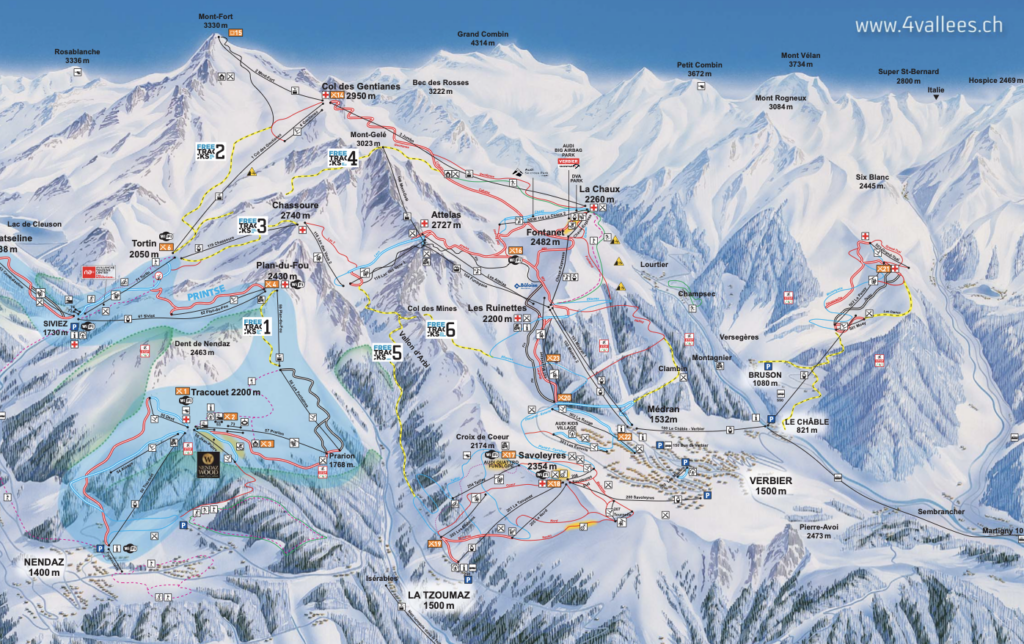
The wider 4 Vallées network connects Verbier with La Tzoumaz, Nendaz, Veysonnaz and Thyon. Exploring it can add variety to a longer holiday, but it is important to allow enough time for lift connections and the return journey. It takes further to get across than you think!
| Ski Lift Type | Count |
|---|---|
| Cable Cars | 6 |
| Gondolas | 13 |
| Chairlifts | 17 |
| Drag Lifts | 25 |
Verbier has some excellent ski schools offering both private and group lessons for adults and children. Booking ahead is particularly worthwhile during peak weeks.
For complete beginners, lessons will generally start around Les Esserts or Le Rouge, where there’s a dedicated learning area to get to grips with it. With private tuition, your instructor can tailor things to your progress, gradually introducing different areas of the mountain as you improve. Group lessons work in much the same way, with the group moving on to more varied terrain as everyone finds their feet.
For more experienced skiers, private tuition can be great for refining technique, tackling steeper pistes or exploring Verbier’s famous freeride terrain. There’s an enormous amount of off-piste skiing and marked freeride itineraries here, so skiing with a qualified local guide is a fantastic way to make the most of what skiing in Verbier has to offer, particularly if you’re keen to venture off-piste.
Local knowledge also helps enormously in choosing the right sector for the conditions and ability of your group each day.
There are different lift-pass options, including passes focused on Verbier and wider access to the 4 Vallées. The right choice depends on where you plan to ski and how confident your group is.
For advanced skiers who want to explore Mont-Fort and the wider linked area, a 4 Vallées pass may make sense. Beginners and visitors who intend to remain in the immediate local areas may not need the same level of access, though, as you certainly wouldn’t need to explore the full 4 Vallées.
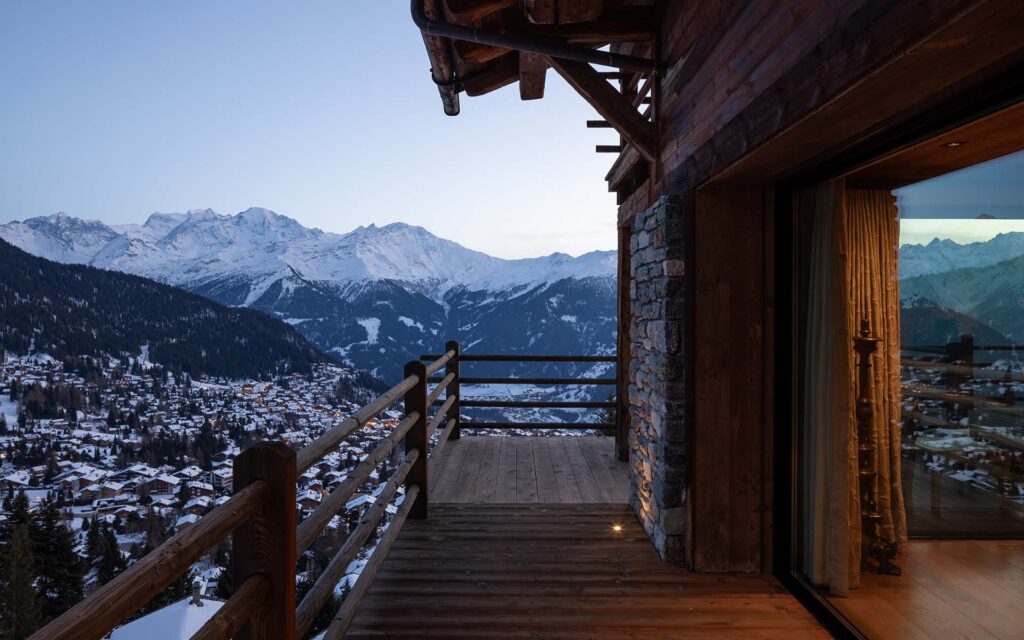
Despite its reputation for challenging skiing, Verbier can work really well for beginners too.
Les Esserts is the dedicated beginner learning area, with a drag lift and gentle slopes where the main ski schools and instructors will bring complete beginners. Being slightly removed from the main ski area is actually a real advantage, creating a much friendlier, less intimidating environment to learn in, away from faster skiers whizzing past.
Once you’re making confident turns and comfortable using lifts, an instructor can gradually introduce you to easier pistes higher up the mountain, including suitable terrain around La Chaux. There’s no need to rush this progression; starting on the right slopes and building confidence makes for a much more enjoyable experience.
For intermediates, skiing in Verbier offers plenty of variety. The main Médran lift takes skiers into the main mountain towards Les Ruinettes. This is an important junction where you can continue up towards Attelas and La Chaux.
Up the Attelas chair is a classic Instagrammable shot, as it’s typically one of the main ski lifts that has designer branding and advertising. For the last five years, it’s been Prada. To me, Attelas is the ‘Prada lift’. The Prada lift is great not just for glam points; there’s a bowl between here and the Col de Chassoure, which is great for intermediates.
Or, from Attelas, you could ski across to La Chaux. It’s a much broader area of the mountain with a mix of reasonably accessible pistes and connections to more demanding terrain higher up. It’s also the spot for my favourite mountain restaurant, the ever-Swiss cutesy Le Dahu.
For intermediates, the area offers opportunities to practise on wide pistes and explore different routes without committing to the steepest parts of the resort. Stronger skiers can use it as a starting point for exploring nearby itineraries, depending on conditions.
Mont-Fort, at 3,330m, is one of Verbier’s defining peaks. The views are exceptional on a clear day, and the terrain (either the black piste or itinerary runs) below is a major draw for strong skiers.
The Savoleyres side over to La Tzoumaz offers a nice change of scenery and a different environment, and is great for a change for the day.
This is where Verbier really comes into its own. It’s one of the Alps’ best-known destinations for advanced skiers, with a huge amount of challenging terrain, steep descents, big mountain skiing and some fantastic off-piste opportunities. It’s no surprise it’s the host for YETI Xtreme Verbier, the finale of the Freeride World Tour.
Outside of the expert competitions and groomed black runs, Verbier has seven official marked freeride itineraries across the wider ski area. These are designated routes marked by yellow poles and shown as yellow lines on the piste map.
They’re not groomed pistes, but rather controlled, marked off-piste routes, often with moguls, powder and more challenging conditions. They offer a great introduction to freeride-style skiing, although they still require very good ability and an understanding of mountain safety. Some of the most well-known of Verbier’s itinerary runs are Chassoure-Tortin, Gentianes-Tortin, and Mont-Gelé…
Chassoure-Tortin is probably one of Verbier’s most famous descents. Starting from the Col de Chassoure, this is a steep, north-facing run down towards Tortin, notorious for its big moguls and challenging terrain. It’s a proper leg-burner and one for confident, strong skiers who enjoy a technical descent.
Another legendary itinerary run is Gentianes-Tortin. It starts high up on the Col des Gentianes, below Mont Fort. This is a long, sustained mogul run with a huge vertical drop, often described as one of Europe’s great bump runs. It’s a serious test of fitness and technique, particularly when the snow is hard-packed.
For something a little different, the Mont-Gelé cable car takes you up to 3,023m, where there are two marked itineraries, one towards Tortin and another towards La Chaux. There are also extensive off-piste possibilities from the summit, making this a particularly exciting area and a lift and spot exclusively for experienced skiers.
Beyond these marked routes, there’s an enormous amount of freeride terrain to explore. I’d really recommend hiring a local mountain guide if you’re keen to make the most of skiing in Verbier. They’ll know where to find the best snow, which aspects are skiing well and how to get the most out of the mountain safely. It’s a destination where having that local knowledge can make a huge difference.
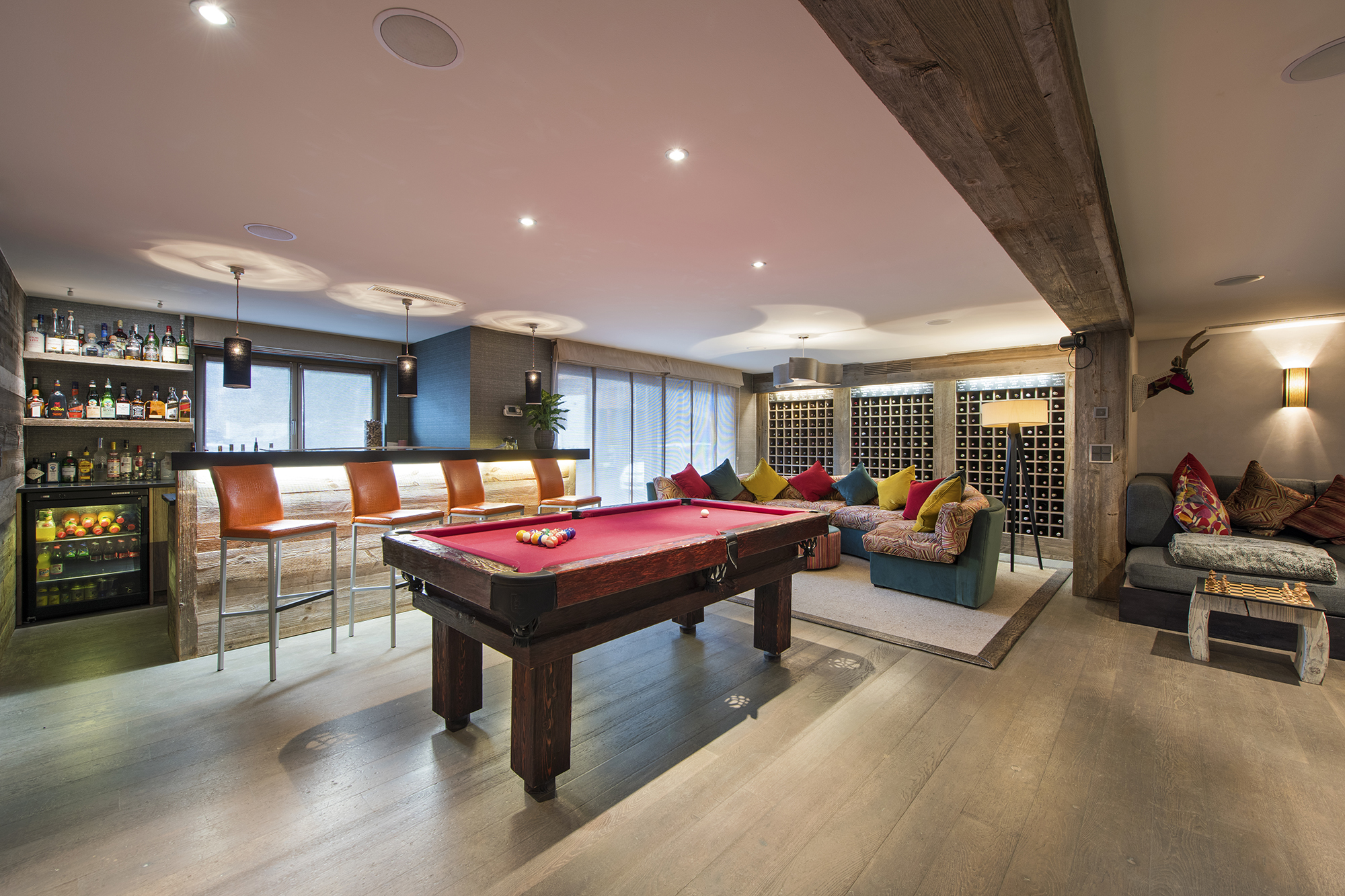
Verbier has a lively social scene, and the village offers plenty to do outside of the epic skiing. There are casual bars for a quick drink, mountain restaurants for long lunches and more formal dining options for evenings when you want to make a special occasion of it.
Après-ski is one of Verbier’s defining features, with options ranging from a quick drink at the end of the lifts to a lively evening in the village.
Le Rouge is a well-known slope-side venue for drinks and music. It’s a convenient place to stop at the end of a ski day if you want to move straight into après-ski rather than head back to your chalet. It has a fantastic sunny terrace at the foot of the slopes, DJs and a more stylish crowd.
Close to Médran, Pub Mont Fort is a Verbier institution, with regular themed parties, guest DJs and live bands throughout the season. It’s particularly popular with seasonnaires and returning visitors, and has a really sociable, slightly less polished ‘pub’ atmosphere
Once in town, one of the best-known spots is Le Farinet, right on Place Centrale, which is famous for its lively atmosphere and live bands. It regularly brings in established party bands from the UK and beyond, rather than relying solely on resident DJs.
If you want to carry on into the evening, Verbier has a proper nightlife scene too. Farm Club is the legendary nightclub and has been a fixture of the resort for decades, attracting an international crowd and some well-known names. There are also more intimate cocktail bars and hotel lounges, such as the W Living Room, if you’d prefer something a little more sophisticated.
Overall, Verbier is a resort where there’s plenty happening off the mountain, whether you’re after a relaxed drink, live music or a full evening out.
For those who care about their food and drink, Verbier has a particularly cosmopolitan feel compared with many other resorts, especially some of the more traditional Swiss destinations.
Its private school, appeal to high-net-worth families spending a season in the mountains, and easy access to Geneva and Sion for private travel have all helped create a very international community. The result is a great choice of restaurants, bars and amenities that cater well to people used to the standards and variety of a major city, rather than a traditional mountain village.
For lunch on the mountain, Le Dahu in La Chaux is my personal favourite. It’s perched on an outcrop, so it feels and looks like you’re on the edge of the mountain, removed from the ski area, with just the views all around you.
Le Carrefour is another strong favourite. As it’s just at the top of Le Rouge in the village, it’s a good spot for experienced and beginner skiers to come together for lunch. It can also be reached by road or footpath, meaning any non-skiers can meet the rest of the group too.
In the village, La Grange is known for traditional Swiss dishes, including fondue and raclette. Le Chaman offers a more contemporary brasserie-style atmosphere. For a special evening, La Table d’Adrien offers a fine-dining experience for any special occasion or evening.
Wellness is a major part of the luxury chalet experience in Verbier. Many high-end properties have their own saunas, hot tubs, swimming pools or treatment areas, making it easy to unwind after a day on the mountain.
For something more active away from the pistes, the Centre Sportif offers an indoor climbing wall of around 600 m², squash courts, an indoor tennis court, a fitness room and a multi-sports hall. You can also play padel and pickleball. Swimming facilities are available separately at Mondzeu, which has an indoor pool, sauna and fitness facilities. It’s a particularly useful option for families, non-skiers or anyone wanting to keep active on a rest day or when the weather isn’t playing ball.
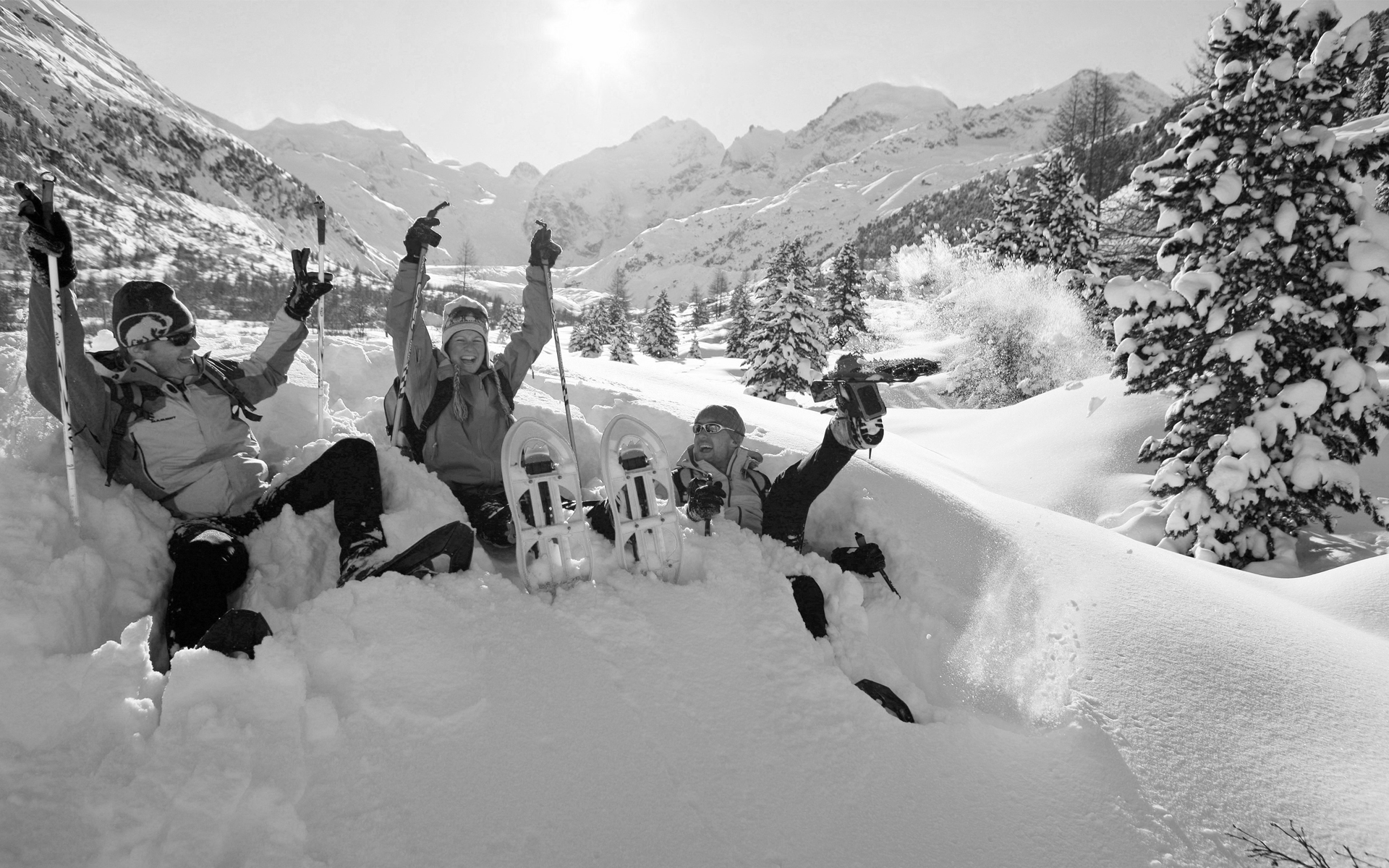
Verbier also offers plenty of winter activities beyond downhill skiing, including snowshoeing, winter walking, ski touring that offer a way to enjoy the scenery without skiing. These are useful for non-skiers or for anyone who wants a quieter day in the mountains.
Sledging is great fun for families and a lovely alternative to skiing. The main attraction is the 5km La Tzoumaz toboggan run, which starts at the top of the Savoleyres gondola and winds its way down through the forest, with a 711m descent. It’s a proper mountain adventure and great fun for older children and adults. For younger children, Les Esserts has a much gentler 200m sledging slope with a magic carpet to take you back up.
Mont-Fort is worth mentioning beyond its skiing. At 3,330m, it provides expansive views across the surrounding Alps on a clear day and is one of Verbier’s most recognisable mountain experiences.
Even if you aren’t going up to tackle the black or itinerary off the top, less experienced skiers can ride the lifts up from La Chaux to the Mont-Fort viewpoints, which are worth doing on a clear day. The ‘red’ Gentianes piste from the Col des Gentianes is one of our favourites for a rolling but challenging run where you can gather some speed.
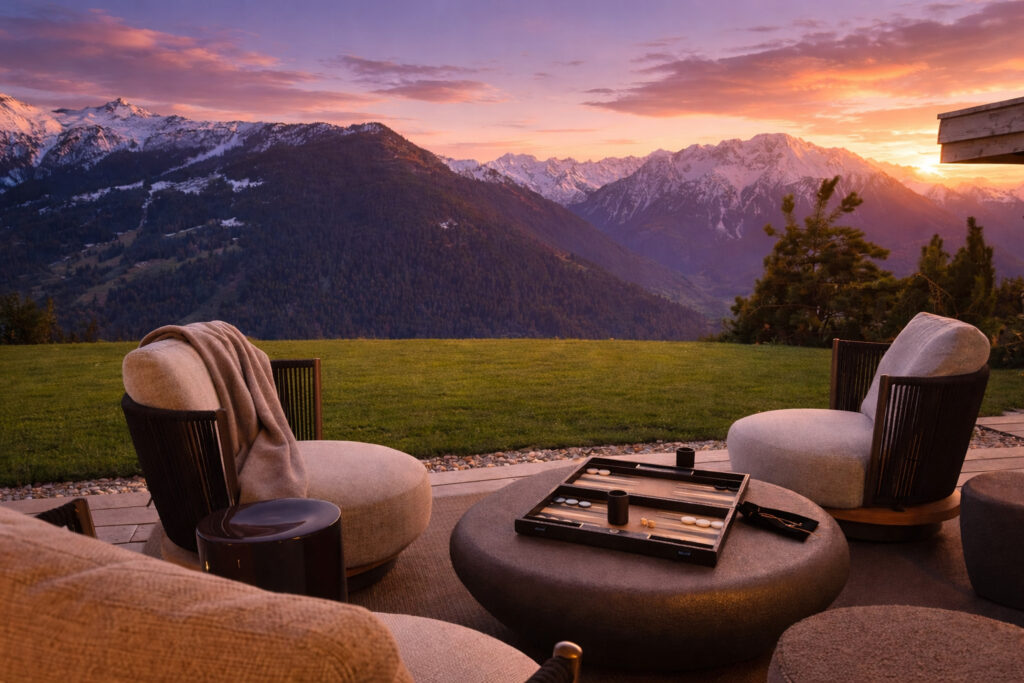
Although Verbier is best known for its skiing, it’s also a fantastic place to visit during the summer months. As the snow melts, the mountains open up for hiking, mountain biking, road cycling and golf, with plenty of opportunities to enjoy the stunning scenery at a slightly slower pace. Many of our chalets are available throughout the summer too, making them a wonderful base for a family mountain escape.
Hiking is one of the main attractions, with routes ranging from relatively gentle walks to more demanding mountain trails. Mountain biking is another major summer activity, with routes and trails for different experience levels. The surrounding Val de Bagnes has alpine meadows, mountain scenery and traditional villages, making it a good base if you want a summer mountain holiday that encapsulates the Swiss Alps.
Golfers are also well catered for, with two courses to choose from. The main Les Esserts 18-hole course sits high above the village, with spectacular views and a fairly technical layout. For something more relaxed, the Moulins Pitch & Putt is an 18-hole course in the heart of Verbier, open to beginners and families without a handicap. It’s a lovely way to spend a summer afternoon, particularly if you’re looking for something to enjoy alongside the hiking, cycling and mountain activities
For chalet guests, summer can be a good time to enjoy terraces, outdoor space and mountain views without the pace of a ski week. As Verbier is built like an amphitheatre facing out South the majority of luxury chalets here have fantastic views and large, sunny terraces and balconies that soak up the run.
Add in the range of wellness facilities, spending time at your private swimming pool, hot tubs, and spacious living areas can be just as appealing after a day outdoors.
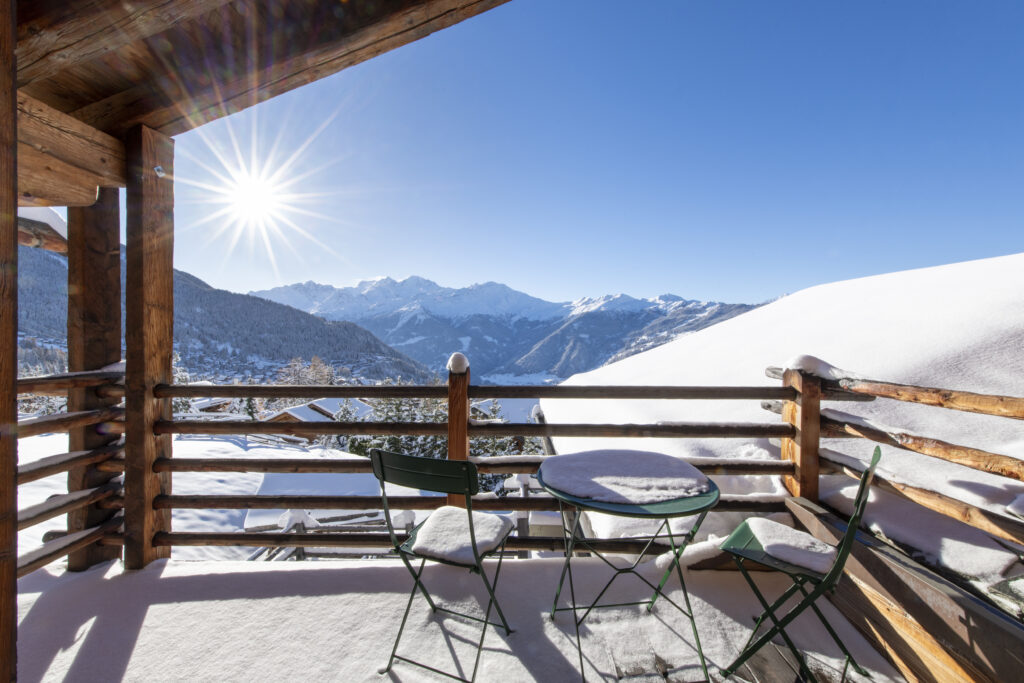
Verbier is reached via the Rhône Valley and the town of Le Châble, which sits on the valley bottom below the resort. Geneva is the main international airport for many visitors, and private transfers are a popular option for groups travelling with ski equipment.
The resort can also be reached by train. From Geneva, travel towards Martigny and change for Le Châble. From there, the gondola takes you straight up to Verbier.
Transfer times can be considerably longer during heavy snowfall, at weekends and around peak periods, so it is worth allowing some flexibility when planning arrival and departure days.
Verbier is in the canton of Valais in southwestern Switzerland, above the Val de Bagnes. It forms part of the 4 Vallées ski area and is connected to neighbouring resorts, including La Tzoumaz, Nendaz, Veysonnaz and Thyon.
Verbier combines challenging, high-altitude skiing, access to a large, linked ski area, a lively après-ski scene and a strong choice of luxury chalets. Its appeal extends beyond expert skiers, though the resort is best known for its steep pistes and freeride terrain.
The wider 4 Vallées ski area has approximately 410km of pistes. Verbier itself forms the largest park of that network, with access to the main mountain around Les Ruinettes, Attelas and La Chaux, as well as the wider linked areas.
Verbier’s upper mountain reaches 3,330m at Mont-Fort, which helps it retain good skiing conditions at altitude. However, conditions can vary down to the village and lower, nursery slopes where beginners might be solely on.
Yes, Les Esserts is the dedicated beginner area, and the resort has established ski schools. However, these learning areas are separate from the main mountain network, so families need to consider accommodation and transport carefully.
Verbier offers a lot for non-skiers, from winter walking, snowshoeing, restaurants, shops and bars. It works particularly well for groups where some members ski, and others prefer a slower mountain holiday, although the main focus of the resort remains skiing.
Sometimes, but don’t assume so. Genuine ski-in/ski-out access to the main ski area is relatively uncommon. Some chalets near Les Esserts have access to the beginner slopes, while other properties may offer a snow-dependent ski-back route. Neither necessarily provides straightforward access to the main lift network. It’s worth focusing on the right property and service style for you rather than the location and access to the skiing in Verbier.
Verbier sits firmly in the luxury end of ski resorts in the Alps. This positioning, combined with Swiss higher costs and prices, means it is one of the more expensive resorts on offer. It isn’t crazy unjustifiable prices like Courchevel 1850, though. It is the price for sunshine, top skiing, top staff and expansive properties in Switzerland.
Verbier combines a substantial linked ski area with a lively village, challenging high-altitude terrain and a strong luxury chalet market. Its reputation for advanced skiing sits alongside beginner learning areas and a varied restaurant scene. The layout is less straightforward than in some purpose-built resorts, so choosing accommodation with the right access is particularly important.
If you’re ready to explore luxury chalet options, browse our collection of luxury ski chalets in Verbier or contact our ski specialists to discuss your next trip to Verbier and the 4 Vallées.

Author
Growing up skiing in the Alps and spending summers sailing sparked a lifelong passion for travel and adventure. Turning a lifelong passion for travel into a career, specialising in luxury ski chalets and summer villas, I love sharing first-hand knowledge to better understand our destinations and shape your next escape.
6 November 2026
View author
Our expert advisers will curate a bespoke shortlist of the finest stays, tailored to your budget and preferences.
 The Best Ski Resorts for Spring Skiing
 Top 7 Apres-Ski Drinks & Recipes for Your Alpine Escape
 The Top 5 Closest Ski Resorts to Geneva Airport
 Geneva Luxury Holiday Guide
 Switzerland Luxury Summer Holidays Guide
 Marbella Luxury Holiday Guide
 Majorca Luxury Holiday Guide
 Ibiza Holiday Guide
 Spain Luxury Holiday Guide
 Algarve Luxury Holiday Guide
 Portugal Luxury Holiday Guide